Views: 0 Author: Site Editor Publish Time: 2026-09-26 Origin: Site
Piping remains the most common point of failure in on-site nitrogen generation systems. When these utility networks fail, they directly impact gas purity, increase compressor workload, and destroy your overall energy return on investment. Facility managers often treat gas distribution as an afterthought, but improper routing or material selection can cripple an otherwise efficient plant.
Standard compressed air distribution parameters fall drastically short for nitrogen applications. Nitrogen demands strict purity standards, often reaching up to 99.999% in sensitive downstream processes. Because of this high-purity threshold, the financial impact of atmospheric leaks or internal contamination becomes significantly worse than a standard air loss.
This guide provides facility managers and engineers an objective framework to evaluate materials, sizing protocols, and vendors for nitrogen and inert gas distribution. You will learn how to avoid common contamination pitfalls, properly size your lines, and design a system engineered for maximum reliability.
Material dictates purity: Upgrading to an aluminum or stainless steel nitrogen pipe prevents internal oxidation, protecting sensitive PSA (Pressure Swing Adsorption) generator membranes and final applications.
Leakage multiplies costs: A pressure drop in a nitrogen piping system forces the feed air compressor to overwork, drastically increasing energy expenditures compared to standard air leaks.
Modularity accelerates deployment: Press-fit and modular aluminum systems minimize installation downtime and eliminate the safety risks associated with hot work (welding).
Vendor evaluation requires specificity: A qualified industrial gas piping supplier should provide documented pressure-drop calculations and leak-free guarantees, not just bulk materials.
Friction inside rough or undersized tubes forces your feed air compressor to operate at much higher pressures. Operators frequently compensate for poor flow by cranking up the compressor discharge pressure. This approach creates a massive energy penalty. Every 2 PSIG increase in pressure drop equates to roughly a 1% increase in compressor energy consumption. Over a typical production year, a poorly designed network wastes thousands of dollars in electricity alone.
Moisture often lingers in the pre-generator compressed air stream. When you route this damp air through standard iron tubes, the interior walls quickly begin to rust. This internal oxidation creates particulate scaling. As the rust flakes off, it travels downstream and destroys the nitrogen generator filtration media. Ultimately, this contamination ruins your post-generator gas purity and damages sensitive end-use equipment. Upgrading your nitrogen air pipe is essential to stop this cycle of degradation.
Nitrogen leaks are exponentially more expensive than standard compressed air leaks. You must factor in the generation ratio. It typically requires four volumes of compressed air (sometimes more) to generate a single volume of high-purity nitrogen. Therefore, losing one cubic foot of nitrogen means you have essentially wasted four cubic feet of expensive compressed air. Stopping leaks at the source becomes a financial imperative, not just a maintenance task.
You must compare materials based on implementation realities, upfront costs, and long-term reliability. A proper nitrogen piping system requires materials that will not degrade under pressure or expose the gas stream to contaminants.
Best for: High-purity applications, including food and beverage packaging, pharmaceutical manufacturing, electronics assembly, and laser cutting.
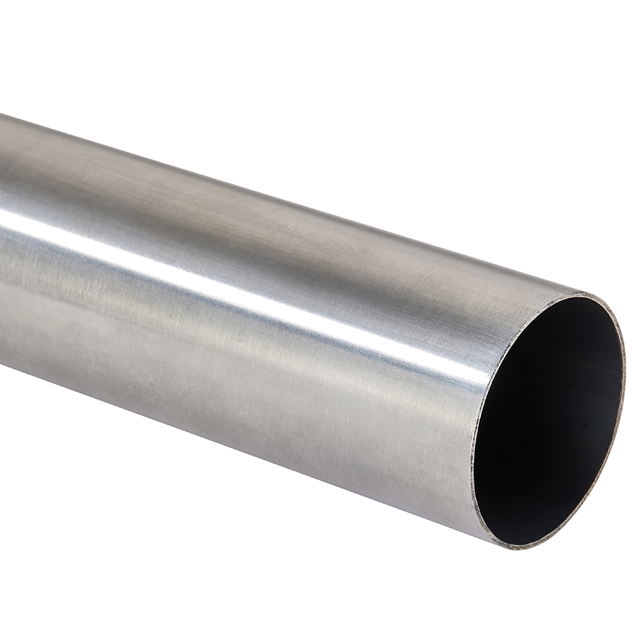
Pros: It provides ultimate corrosion resistance and easily handles high operating pressures. You experience zero degradation over the lifespan of the material.
Cons: It commands a higher initial material cost. Installation also requires specialized press-fit tools or skilled orbital welding labor.
We recommend a modern stainless steel nitrogen pipe network for any facility where trace contaminants could trigger massive product recalls.
Best for: Broad industrial manufacturing and general application requirements.
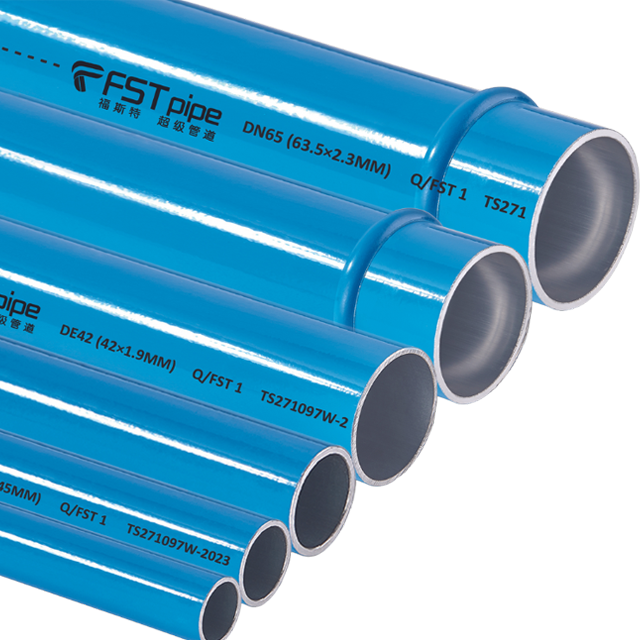
Pros: Aluminum remains lightweight and inherently corrosion-resistant. Its smooth interior yields minimal pressure drop. The push-to-connect nature makes it highly modular for future facility expansion.
Cons: It is vulnerable to external impact. You must route it carefully away from high-traffic forklift zones to prevent physical damage.
Black Iron / Carbon Steel: Internal scaling guarantees eventual contamination. Threaded joints are notorious for developing micro-leaks due to constant compressor vibration.
PVC: The Occupational Safety and Health Administration (OSHA) strictly prohibits PVC for compressible gases. It poses a severe fragmentation hazard if ruptured.
Brazed Copper: Copper resists external corrosion well. However, if you do not properly purge the lines with an inert gas during brazing, internal flaking occurs. This internal scale will heavily contaminate your nitrogen stream.
Material Type | Purity Protection | Installation Speed | Corrosion Resistance | Best Application |
|---|---|---|---|---|
Stainless Steel (Press-Fit) | Excellent | Moderate | Excellent | Food, Pharma, Electronics |
Extruded Aluminum | Very Good | Fast | Very Good | General Manufacturing |
Black Iron | Poor (Rusts) | Slow (Threading) | Poor | Do Not Use for Nitrogen |
Brazed Copper | Variable (Flaking risk) | Slow (Brazing) | Good | Small-scale Medical (if purged) |
Facility architecture dictates a strict separation between the two phases of gas flow. The air compressor piping feeding the generator must handle bulk moisture, potential oil carryover, and fluctuating temperatures. In contrast, the downstream distribution network exclusively handles ultra-dry, high-purity nitrogen. Mixing components or undersizing either side of the generator limits the output capacity of the entire plant.
Proper diameter sizing prevents turbulent flow. You must define the acceptable velocity limits for your network. Industry standards recommend keeping gas velocity under 20 to 30 feet per second. When gas travels faster than this threshold, it creates severe turbulence. Turbulent flow exponentially increases friction, leading to severe pressure drops over long facility runs. Always size up the main header to lower the velocity, utilizing smaller drop lines only at the point of use.
Tanks act as the lungs of your system. You must implement a dual-tank architecture for stability.
Wet Tanks (Pre-Generator): Place these immediately after the compressor. They handle mechanical pulsation and collect heavy condensate before the air enters the filtration stage.
Dry Tanks (Post-Generator): Install these after the nitrogen generator. They buffer peak nitrogen demand events, ensuring sudden process requirements do not starve the pipeline or pull unpurified air through the generator membranes.
Traditional threading introduces high risks over time. The constant vibration from nearby machinery causes threaded joints to back out, creating invisible leak paths. Modern facilities should contrast these outdated methods with O-ring sealed press-fit and push-to-connect systems. Press-fit technology locks the seal in place mechanically. It delivers a permanent, leak-free joint in seconds, drastically reducing labor costs and facility downtime during installation.
Metals expand and contract as ambient temperatures shift. You must highlight the necessity of expansion loops in long, straight runs of aluminum or stainless steel. Without these strategic loops or expansion joints, thermal movement places immense stress on the fittings. Over time, rigid straight runs will warp or snap at the connection points. Proper routing accommodates this movement safely.
Never sign off on a new installation without a strict commissioning protocol. Establish baseline expectations for pressure testing the system. You must perform this test using an inert gas, not raw shop air. Introducing standard shop air into a newly cleaned nitrogen line instantly contaminates the interior walls with moisture and oil vapor. A proper pressure test ensures zero contamination and verifies the structural integrity of every joint.
You should demand suppliers who provide comprehensive engineering support. A reliable partner offers 3D CAD routing and exact pressure-drop modeling before you sign the purchase order. This technical validation ensures the proposed diameters will actually meet your peak flow demands. Avoid vendors who simply sell bulk materials without verifying the physics of your specific layout.
Ensure the vendor manufactures both the tubes and the proprietary fittings. Mixing brands often voids leak warranties and introduces microscopic tolerance mismatches. When a single manufacturer produces the entire ecosystem, the O-rings and metal tolerances align perfectly, guaranteeing a secure seal.
Verify your supplier meets established safety regulations, such as ASME B31.1 or B31.3 standards. They must use materials explicitly rated for the specific pressure and purity requirements of your facility. When dealing with compressed gases, uncertified materials pose a significant safety risk to personnel.
Before committing to a total system redesign, recommend initiating a comprehensive site audit. Request a flow-meter analysis on your existing lines. This data reveals your actual usage patterns versus assumed demand. Engaging a qualified industrial gas piping supplier for this audit provides the objective data needed to justify the upgrade investment.
Effective distribution for nitrogen generation is not a commodity purchase. It represents a critical utility investment that protects product quality, ensures operator safety, and extends your compressor lifespan. Upgrading from legacy iron networks to advanced modular materials fundamentally changes facility performance.
Choosing the right material, such as smooth-bore aluminum or stainless steel, and sizing it correctly eliminates the hidden financial drain of pressure drops and undetected leaks. You protect your high-purity applications while slashing daily electricity consumption.
Take action to secure your gas distribution network today. We recommend the following next steps:
Schedule a professional piping system audit to identify hidden leaks and turbulent flow zones.
Install flow meters on your current main headers to establish an accurate baseline of your peak demand.
Contact a certified engineer for a custom sizing consultation before purchasing any new generator equipment.
A: Generally not recommended unless the existing pipe is a non-corrosive material (like aluminum or stainless) and has been thoroughly cleaned. Reusing old black iron or galvanized pipe will contaminate the ultra-dry nitrogen with residual oil, moisture, and rust flakes.
A: Industry best practice dictates a maximum pressure drop of 5% (and ideally less than 2-3 PSI) from the nitrogen generator outlet to the furthest point of use.
A: Yes, for safety and compliance (such as ASME A13.1), inert gas piping should be clearly labeled. Nitrogen pipes are typically designated with green or blue labels with white lettering, and flow direction arrows must be visible to prevent cross-contamination or maintenance accidents.
A: While copper is corrosion-resistant, brazing copper introduces internal scale unless purged with an inert gas during installation. For high-purity needs, press-fit stainless steel or modular aluminum is significantly safer and easier to validate.