Views: 0 Author: Site Editor Publish Time: 2026-09-28 Origin: Site
Industrial piping systems rely heavily on precise valve selection to operate safely. Getting this mechanical choice right maintains pressure integrity, prevents media contamination, and minimizes energy waste across your facility. Unfortunately, many operators overlook this critical component. A misapplied valve quickly leads to measurable financial losses. You might experience artificial pressure drops in your pneumatic lines. Alternatively, you could face severe vacuum degradation or highly expensive inert gas leaks. These failures disrupt production schedules and heavily compromise plant safety.
Our goal here is to provide piping engineers and facility managers with a reliable, evidence-based framework. We will help you evaluate and specify the exact valves required for distinct pneumatic and gaseous applications. You will learn how to match media types to valve designs for optimal performance. By understanding these core principles, you can secure system reliability and build a highly efficient industrial piping network.
Media Dictates Design: Compressed air, vacuum, and inert gases require distinct sealing mechanisms and flow profiles; a universal valve approach risks system failure.
Sizing Limits Pressure Drop: Specifying valves based solely on pipe diameter rather than Flow Coefficient (Cv) guarantees system inefficiency.
Material Integrity Matters: Inert gases and high-demand applications require specific metallurgical choices, such as an SS304 butterfly valve, to prevent oxidation and ensure longevity.
Supplier Vetting is Critical: Partnering with an accountable industrial valve supplier ensures traceability, rigorous leak-rate testing, and post-installation reliability.
Selecting the wrong valve creates a cascading effect of operational failures. Facilities often underestimate how quickly improper hardware degrades system performance. Poor mechanical choices directly inflate utility bills and compromise process safety.
Undersized compressed air piping valves restrict airflow significantly. This restriction creates severe energy waste through artificial pressure drops. When pressure drops occur at the valve, compressors must overwork to compensate for the loss. They run longer cycles and consume more kilowatts. This constant overworking drastically reduces the compressor's lifespan. Over time, the financial penalty of wasted electricity far exceeds the initial purchase price of a properly sized valve.
System contamination represents another major risk factor. Vacuum systems and pure gas lines are highly sensitive to impurities. If you choose improper seal materials, they will outgas when exposed to deep vacuums. This outgassing introduces foreign molecules into the system. Similarly, standard industrial valves often shed microscopic particulates into pure inert gas lines. These contaminants ruin sensitive manufacturing processes, especially in semiconductor or pharmaceutical applications.
Premature valve failure also causes expensive maintenance downtime. Inferior valves suffer from mechanical galling. Moving metal parts fuse together under friction. You might also experience sudden seal blowouts due to pressure spikes. Replacing failed components halts production lines entirely. Specifying high-cycle-life components yields an excellent return on investment. You achieve predictable maintenance schedules and avoid emergency system shutdowns.
Every gaseous medium behaves differently under pressure. You cannot safely apply a one-size-fits-all approach across your facility. Media characteristics must dictate your specific valve architecture.
Compressed air systems demand robust components. Your primary priorities are rapid isolation and minimal pressure drop. The valve must also resist aggressive synthetic compressor oils. Moisture condensation frequently builds up inside these lines. The internal mechanisms must withstand this constant moisture without rusting.
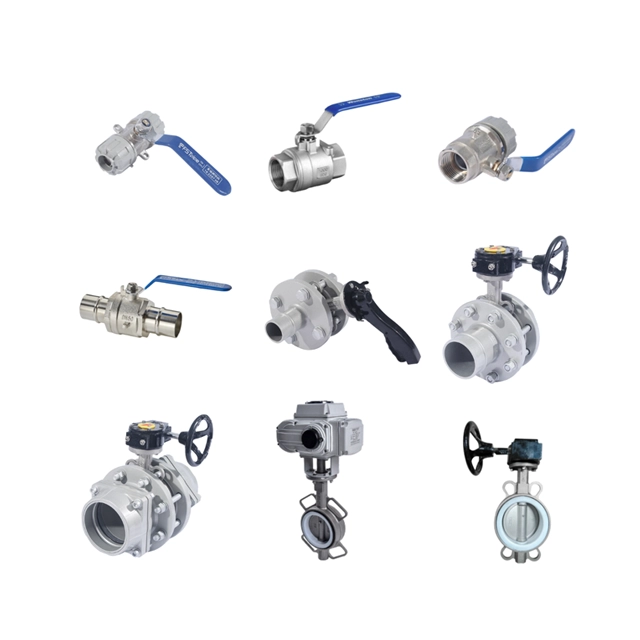
We recommend full-port ball valves for smaller pneumatic lines. They provide an unobstructed flow path when fully open. This design virtually eliminates pressure drop. For larger main headers, you should specify lug or wafer butterfly valves. A properly engineered compressed air valve handles rapid actuation safely. It isolates system sections quickly during emergencies.
Vacuum systems operate under unique physical laws. Your main priorities include bi-directional sealing capability and strict zero-leakage standards. You must also prevent elastomer outgassing. Engineers must manage molecular flow differently than standard viscous flow. In a deep vacuum, gas molecules travel independently. They easily slip through microscopic seal imperfections.
You should deploy high-performance butterfly valves for rough vacuums. Specialized diaphragm valves handle medium vacuum ranges excellently. For high-purity vacuum environments, you need bellows-sealed valves. These units isolate the valve stem entirely from the atmosphere. A specialized vacuum piping valve uses precision elastomers like Viton. Viton resists outgassing and maintains structural integrity under negative pressure.
Inert gases serve as critical utility media in manufacturing. Purity maintenance ranks as your highest priority. You might also require cryogenic compatibility for liquid nitrogen applications. Facilities demand absolute zero fugitive emissions. Helium molecules are incredibly small. They will escape through standard industrial seals easily.
You must specify cleaned-for-oxygen-service ball valves. This special cleaning process removes all combustible lubricants. It prevents dangerous reactions and keeps the gas perfectly pure. A dedicated inert gas valve manufactured from high-grade SS304 or SS316 stainless steel prevents system oxidation. You guarantee that the gas remains uncontaminated from the source to the final point of use.
Once you identify the correct valve category, you must finalize the technical specifications. Sizing, metallurgy, and automation capabilities determine actual field performance.
The mathematical reality of valve sizing often surprises engineers. Physical pipe size does not guarantee adequate flow. You must match the valve's Flow Coefficient (Cv) to the required flow rate. The Cv value indicates how many gallons of water pass through the valve per minute at a 1 PSI pressure drop. Specifying valves solely on pipe diameter guarantees system inefficiency.
Follow this numbered list for accurate sizing:
Calculate the absolute maximum flow rate required by downstream equipment.
Determine the maximum allowable pressure drop for that specific pipeline segment.
Consult the manufacturer's engineering data to locate the Cv curves.
Select a valve with a Cv rating that comfortably exceeds your calculated requirement.
Material specifications dictate physical survival in harsh environments. You must assess the necessity of corrosion-resistant housings. Mixed-humidity industrial environments destroy carbon steel quickly. We position the SS304 butterfly valve as the baseline standard for durability. It prevents surface oxidation. It also resists internal scaling caused by compressed air moisture.
Seat and seal selection determines whether the valve will leak. Elastomers react differently to chemical exposure. You must choose between PTFE, EPDM, and NBR materials carefully. EPDM swells and fails rapidly when exposed to hydrocarbon compressor oils. Conversely, PTFE offers superior chemical inertness. It handles aggressive media easily.
Elastomer Material | Recommended Media | Not Recommended For | Key Advantage |
|---|---|---|---|
EPDM | Water, Steam, Clean Air | Hydrocarbon Oils, Petroleum | Excellent temperature resistance |
NBR (Buna-N) | Oiled Compressed Air | Ozone, Strong Acids | Superior oil resistance |
PTFE (Teflon) | Inert Gases, High-Purity Vacuums | Abrasive Slurries | Absolute chemical inertness |
FKM (Viton) | Deep Vacuums, Hot Gases | Low-Temperature Cryogenics | Prevents molecular outgassing |
Actuation compatibility defines how the valve integrates into your facility. You must choose between manual, pneumatic, and electric actuators. This choice depends on system automation requirements. You must also determine the fail-safe positioning. In the event of a power loss, valves must move to a safe state. A Fail-Open configuration vents pressure safely. A Fail-Closed configuration traps hazardous gases inside the pipe securely.
Even perfectly specified valves fail if installed incorrectly. Installation realities often differ from engineering drawings. Field technicians sometimes make costly deployment errors.
Common installation mistakes include:
Over-torquing wafer valves: Excessive bolt tightening crushes the elastomer seat. This forces the rubber into the flow path and binds the internal disc.
Inadequate pipe support: Unsupported heavy pipes transfer their physical weight onto the valve flanges. This stress warps the valve body and causes immediate external leaks.
Improper orientation: Installing directional valves backward ruins the sealing mechanism instantly.
You must demand proof of factory testing. Do not rely on self-attested marketing claims. Acceptable leak rates follow strict industrial standards. You should reference API 598 or FCI 70-2 classifications. These frameworks define exactly how many gas bubbles can escape past a closed seat per minute. You should verify these testing certificates before accepting a delivery.
Lifecycle scalability represents a major hidden factor. Facilities grow over time. You must evaluate whether the selected valve architecture handles future capacity expansions. A smart layout utilizes modular isolation zones. This design lets technicians add new branches later. They can perform this work without requiring a total manifold teardown. It saves immense labor hours down the line.
Procuring valves requires a reliable supply chain partner. Your vendor acts as an extension of your engineering team. Careful vetting ensures long-term operational success.
Technical consultation separates order-takers from true experts. A credible industrial valve supplier challenges your initial assumptions. They should ask detailed questions before quoting a price. They will inquire about your exact media velocity. They will confirm your ambient temperature ranges. They will analyze your dynamic pressure profiles. This rigor prevents costly specification errors.
Manufacturing transparency matters deeply. You should assess the value of working with a supplier capable of deep customization. Sometimes standard catalogs fall short. You might need an engineered OEM butterfly valve. This custom unit can feature non-standard face-to-face dimensions to fit older piping layouts. It can also feature specific actuation torques designed for low-pressure pneumatic controllers. A true manufacturing partner accommodates these complex requests easily.
Documentation and traceability protect your liability. You must require Material Test Reports (MTRs) for all stainless steel components. These reports prove the exact chemical composition of the metal. You should also verify their ISO quality management certifications. Documented warranty terms serve as non-negotiable prerequisites for procurement. Traceability ensures you can identify the exact manufacturing batch if a defect surfaces years later.
The right valve bridges the critical gap between mechanical design and real-world operational efficiency. Selecting hardware based on media characteristics protects your entire facility from unexpected downtime. You secure your system against artificial pressure drops, molecular outgassing, and dangerous leaks.
We urge you to audit your current system schematics immediately. Compare your installed hardware against the media-specific criteria discussed above. Look for mismatched elastomers and undersized flow pathways. Addressing these bottlenecks will yield immediate performance improvements.
Take proactive steps today to secure your infrastructure. Contact our engineering team for a comprehensive technical consultation. We can perform a precise flow sizing analysis for your facility. Submit a formal RFQ to upgrade your critical pneumatic and gas delivery systems.
A: No. Liquid valves often fail rapidly in compressed air systems. They utilize different internal seat designs meant for dense fluids. They lack the gas-tight seals necessary to hold air molecules. Furthermore, standard water valves remain highly vulnerable to air-borne particulates and synthetic compressor oils, which degrade the internal rubber seals.
A: The primary difference involves directional pressure. Compressed air valves contain high internal outward pressure. Vacuum valves must seal against external atmospheric pressure trying to force its way into the pipe. Vacuum valves require specific seal geometries and specialized elastomers to manage molecular flow and prevent external air ingress.
A: Stainless Steel 304 prevents rust and scaling entirely. Carbon steel valves develop internal rust when exposed to trace moisture. This rust flakes off and introduces dangerous particulates into the gas stream. An SS304 valve ensures the inert gas remains completely uncontaminated throughout the entire delivery system.