Views: 0 Author: Site Editor Publish Time: 2026-09-17 Origin: Site
Compressed air acts as the "fourth utility" in food processing facilities. Direct or indirect contact between pneumatic air and food products creates a severe contamination vulnerability. Plant managers cannot afford to ignore aging infrastructure. Legacy piping materials like black iron and galvanized steel inevitably scale and rust over time. This continuous deterioration causes downstream filter blinding, severe pressure drops, and costly compliance failures during routine hygiene audits. Facility operators face endless battles trying to keep particulate loads away from sterile zones.
Upgrading your network to a modern aluminum air pipe system solves these operational challenges effectively. This approach perfectly balances strict sanitary requirements against rapid plant installation speeds. We will explore how upgrading protects your most sensitive pneumatic components. You will learn to navigate material choices, meet strict ISO purity standards, and avoid common installation pitfalls. Modernizing your facility infrastructure ensures continuous production safety.
Zero-Degradation: Aluminum does not rust or scale, protecting sensitive downstream filtration and pneumatic components from particulate loading.
Compliance Enabler: Forms the non-reactive backbone of a clean air system capable of meeting strict ISO 8573-1 air purity classes.
Cost-to-Performance: Delivers the sanitary benefits of a smooth inner bore at a fraction of the material and labor cost of welded stainless steel.
System Integrity: Modern push-to-connect or clamp fittings eliminate the need for threading, brazing, or welding, avoiding internal debris during installation.
Many older food manufacturing plants still rely heavily on galvanized or black iron pipes. These outdated materials introduce massive hidden operational hazards daily. Moisture constantly travels through pneumatic networks, regardless of dryer performance. Liquid water reacts aggressively against untreated iron surfaces inside the tubes. This chemical reaction produces abrasive iron oxide flakes, commonly known as rust. These dangerous particulates travel freely throughout the network. They eventually force their way into sensitive packaging zones. Rust compromises product safety and simultaneously ruins expensive pneumatic cylinders.
Internal pipe scaling creates another significant operational burden for facility managers. Rough internal surfaces increase air friction dramatically as rust builds up. This ongoing resistance creates a massive pressure drop penalty across your entire plant. Your expensive air compressors must run significantly harder to maintain required end-point pressure. You burn excess electricity simply to push air past internal rust layers. Equipment wears out much faster under this artificial load.
Facility operators sometimes attempt substituting cheap plastics to avoid rust entirely. This strategy creates a very dangerous false economy. Standard PVC poses a severe safety hazard in industrial settings. It easily shatters under typical pneumatic pressure. OSHA explicitly prohibits PVC for transporting compressed gases. Specialized pneumatic plastics do exist, but they suffer major limitations. These synthetic materials often fail during intense thermal plant washdowns. High temperatures warp plastic lines easily, causing catastrophic leaks above food zones. You risk massive downtime when plastic fittings melt or distort.
Selecting the right material requires evaluating your specific operational demands closely. Facilities usually choose between stainless steel and aluminum for sanitary applications. Each option offers distinct advantages depending on the installation environment.
Stainless steel remains the traditional gold standard for food processing. Food plants trust it deeply for harsh washdown environments. It excels where direct liquid food transfer occurs. It handles extremely aggressive caustic foaming chemicals without degrading. However, stainless steel carries exceptionally high material expenses. Installation requires specialized orbital welding or complex manual threading. The pipe itself remains incredibly heavy, making overhead rigging difficult. You will struggle to reconfigure layouts when production lines inevitably change. The specialized labor required delays project timelines significantly.
Conversely, aluminum represents the modern standard for plant modernization projects. The metal is incredibly lightweight and easy to maneuver. Maintenance teams can install it up to 50% faster than traditional steel. The installation process requires no hot-work permits or welding equipment. The extruded inner bore stays inherently smooth, ensuring very low air friction. The main limitation involves extreme chemical exposure during cleaning cycles. You might need external sleeving if routing lines directly through highly caustic washdown zones.
Table 1: Material Comparison Matrix
Feature | Stainless Steel (304/316) | Anodized Aluminum |
|---|---|---|
Corrosion Resistance | Excellent (Internal and External) | Excellent (Internal), Moderate (External Washdown) |
Installation Speed | Slow (Requires Welding/Threading) | Fast (Push-to-Connect / Clamp Fittings) |
System Weight | Very Heavy | Lightweight |
Modularity | Rigid, difficult to modify | Highly adaptable, reusable fittings |
You must deploy materials strategically across your plant layout. Use stainless steel for direct product transfer and extreme caustic washdown areas. Rely on high-quality hygienic compressed air piping made of aluminum for overhead distribution. Aluminum perfectly handles pneumatic tool drops, sorting machines, and secondary packaging lines.
Food safety regulations demand pristine pneumatic infrastructure at all times. Achieving strict ISO 8573-1 air purity classes requires a holistic facility approach. Upgrading your pipe material alone will not guarantee a certified food grade air pipe network. You must pair the conduit system alongside specialized filtration components. The network requires proper refrigerated or desiccant dryers. You also need point-of-use coalescing filters and sterile membrane filters.
Aluminum plays a crucial role as a reliable passive conduit. It never sheds internal particulates into your clean airstream. This non-contaminating nature completely protects your delicate downstream equipment. Because aluminum refuses to rust, it dramatically extends the lifespan of critical sterile filters. You avoid premature filter blinding and maintain consistent airflow to packaging machines. It serves as the ideal backbone for a comprehensive clean air system. When you eliminate rust, your filters only need to catch compressor oil and ambient dust.
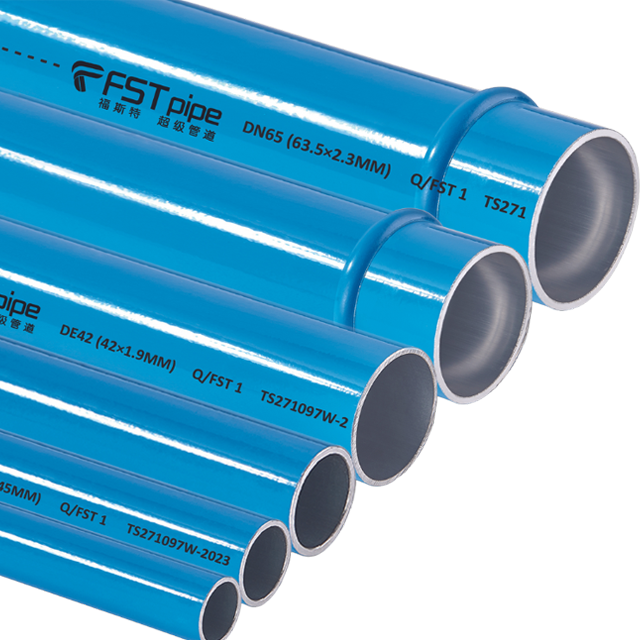
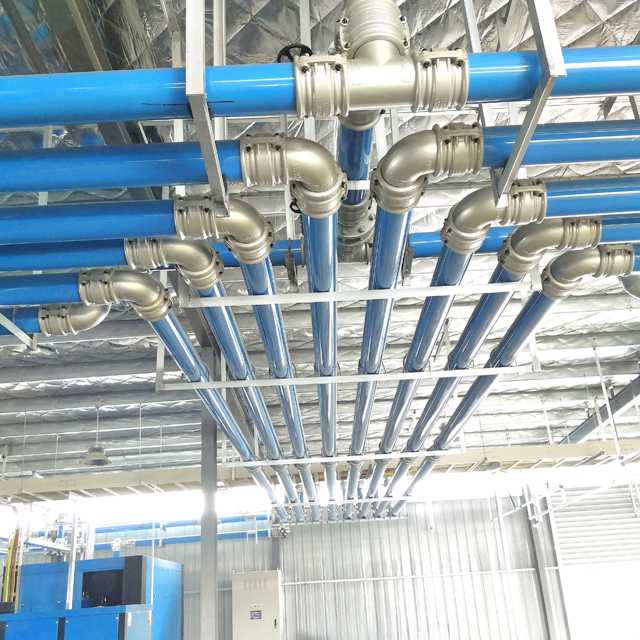
Auditors heavily scrutinize pneumatic infrastructure during FDA and SQF inspections. Standardized aluminum networks simplify these stressful safety audits immensely. Manufacturers typically powder-coat these pipes in bright safety blue. This distinct coloring allows rapid visual system tracing for inspectors. Plant managers can easily differentiate pneumatic lines from water or hazardous chemical conduits.
Compliance becomes much easier to prove during unannounced visits. You eliminate the rusty, leaking threaded joints characteristic of older systems. Clean, brightly colored overhead lines signal facility excellence to visiting auditors immediately. They recognize your proactive commitment to sanitary manufacturing practices. This visual evidence builds trust and speeds up the certification process.
Not all pneumatic conduits deliver the same sanitary performance levels. You must evaluate available options using strict engineering criteria. We recommend assessing three primary categories before purchasing any new infrastructure.
Inner Surface Smoothness: Evaluate the internal friction coefficient closely during your selection process. High-quality extruded aluminum maintains a consistently smooth inner bore. This mirror-like finish minimizes air turbulence inside the entire network. It eliminates rough pockets where moisture and bacteria could potentially accumulate. Smooth walls keep energy costs low by reducing drag on the compressor.
Fittings and Connections: Examine the mechanical joining methods offered by the manufacturer. Most suppliers offer mechanical lug, crimp, or modern push-to-connect systems. You must verify internal seal materials carefully. Ensure all O-rings meet strict FDA compliance standards for incidental contact. Select Nitrile or FKM seals based on your specific compressor oil compatibility. Mismatched seals will swell and leak over time.
Modularity and Scalability: Food processing plants change production layouts frequently to meet consumer demands. Your infrastructure must adapt rapidly without causing massive delays. The best networks allow for safe "hot tapping" under isolated pressure. You can simply disassemble connections to add new tool drops easily. You avoid shutting down the entire facility for multiple days just to add one packaging machine.
Prioritizing these specific evaluation factors guarantees long-term operational success. You secure a reliable framework capable of handling evolving production demands seamlessly. The right mechanical connections protect product integrity while keeping routine maintenance extremely simple.
Proper material selection only solves half the engineering puzzle. Careless installation ruins even the most advanced sanitary networks. You must anticipate real-world physical forces during the rollout phase. Ignoring basic physics leads to catastrophic system failures.
Thermal expansion presents a major engineering challenge for long runs. Aluminum expands and contracts significantly during ambient temperature swings. Long overhead runs require careful structural planning. You must install dedicated expansion loops or utilize specialized sliding brackets. This proves especially critical in refrigerated processing zones or near industrial baking ovens. Rigidly clamping long sections leads to warped lines and blown seals eventually. The metal needs room to move naturally.
Condensation management requires equally strict attention from your installation team. Even a premium corrosion resistant air pipe transports liquid water if your main dryer fails. You must implement defensive installation techniques at every tool drop. Always install "gooseneck" drops for your vertical connections. Route the vertical drop pipe upward before turning it downward toward the floor. This gravity barrier prevents pooling water from draining directly into sensitive food zones.
Mixed-metal corrosion introduces another severe hidden hazard. Industrial manufacturing environments feature high ambient humidity levels constantly. Connecting aluminum directly to brass or copper valves initiates dangerous galvanic action. The dissimilar metals react chemically, causing rapid localized corrosion at the joint. You must use proper dielectric isolation fittings for these transitions. These specialized isolators break the electrical conductivity between different metals effectively. Ignoring this rule guarantees premature joint failure and sudden pressure loss.
Sourcing materials from a generic industrial catalog invites operational disaster. You need a dedicated technical partner who understands sanitary processing requirements. Carefully evaluate potential vendors using these three essential criteria.
First, demand comprehensive engineering and sizing support upfront. Ask them if they offer detailed pressure-drop calculations for your specific layout. A reputable food industry pipe supplier provides accurate 3D CAD modeling services. They help optimize your entire facility layout before physical installation begins. This digital planning prevents costly sizing mistakes and ensures adequate airflow everywhere.
Next, investigate their physical inventory and domestic availability. Robust local stock is absolutely non-negotiable for food plants. Breakdowns always happen at the worst possible production moments. Waiting three weeks for proprietary push-fittings during a plant outage is unacceptable. Your supplier must guarantee rapid delivery for critical spare parts and expansion components. Ask about their warehouse locations and typical shipping times.
Finally, scrutinize the specific warranty terms provided by the manufacturer. Look for robust structural warranties spanning ten years or more. Read the fine print carefully regarding allowable operating environments. The warranty must specifically cover pipe structural integrity and fitting leak resistance. It should apply under continuous pressure conditions typical in daily manufacturing. A strong, transparent warranty proves the manufacturer trusts their own mechanical seal designs. Avoid suppliers who hide exclusion clauses regarding normal compressor vibrations.
Upgrading your facility infrastructure resolves persistent contamination issues permanently. Transitioning away from legacy black iron protects your product and capital equipment. An aluminum pneumatic network eliminates particulate shedding directly at the source. It delivers superior performance compared to heavier, outdated metallic alternatives. You achieve faster installation times and eliminate dangerous hot-work risks entirely.
Facility managers should take immediate action to protect their plants. First, conduct a comprehensive pneumatic audit to map out existing pressure drops. Identify where old iron pipes restrict your compressor output. Next, evaluate your current filtration components for dangerous rust loading. Finally, request a pilot retrofit on a single packaging line. This isolated test validates installation speed and proves system cleanliness before committing to a full plant rollout.
A: Most anodized or powder-coated aluminum pipes handle incidental moisture perfectly. However, for direct spray with high-concentration caustic foamers, protective jacketing or a switch to 316 stainless for the specific drop may be required.
A: No welding or threading is needed. Most systems require only a simple pipe cutter, a deburring tool, and standard wrenches for mechanical fittings.
A: Yes, when used for pneumatic power and non-contact/indirect-contact applications, provided the system utilizes appropriate food-grade compressor lubricants, dryers, and point-of-use filtration.