Views: 0 Author: Site Editor Publish Time: 2025-12-03 Origin: Site
Engineers and plant managers often ask a critical question when designing pneumatic systems: how much pressure can aluminum actually hold? The answer requires distinguishing between the raw material’s theoretical limits and the safe operating capacity of an installed system. While raw aluminum alloys like 6061-T6 possess tensile strengths exceeding 40,000 PSI, this figure does not represent the safe working pressure for industrial piping. Industrial aluminum compressed air pipe systems are typically rated for maximum working pressures (MWP) between 190 and 232 PSI at standard ambient temperatures.
Understanding this distinction is vital for facility safety and capital efficiency. Confusing material yield strength—the point where metal permanently deforms—with system working pressure can lead to dangerous under-specifying or expensive over-engineering. Safe operating limits are defined by strict codes such as ASME B31.3, not just the alloy's breaking point. This guide explores the engineering mechanics, safety factors, and temperature variables that define internal pressure containment for modern Aluminum Air Pipe systems.
System vs. Material: A pipe’s rating is determined by the "weakest link" factor—often the fitting technology or the safety factor required by OSHA/ASME, not just the raw alloy strength.
Standard Ratings: Most "Blue Pipe" (6063 Aluminum) systems are standardized for 200+ PSI, covering 95% of industrial plant air requirements.
Temperature Derating: Aluminum loses pressure retention capabilities as temperatures rise (above 100°F/38°C) but gains strength in cryogenic conditions.
Diameter Matters: According to Barlow’s Formula, as pipe diameter increases, pressure tolerance decreases unless wall thickness increases proportionately.
To understand why a pipe rated for 232 PSI is made of metal that withstands 30,000 PSI, we must clarify the engineering reality behind the numbers. The discrepancy lies in the difference between ultimate burst pressure and safe working pressure.
Two primary metrics define the strength of aluminum alloys. Tensile Yield is the stress level where the aluminum begins to stretch permanently. For example, the yield strength of 6061-T6 is approximately 40,000 PSI, while 6063-T5 hovers around 21,000 PSI. Burst Pressure is the theoretical internal pressure required to actually rupture the pipe wall.
Engineers calculate these theoretical limits using Barlow’s Formula:
$$P = \frac{2St}{D}$$
Where:
P = Internal Pressure
S = Material Yield Strength
t = Wall Thickness
D = Outside Diameter
This formula reveals that pressure capacity depends heavily on geometry, not just material hardness. A smaller tube can naturally hold more pressure than a larger one if wall thickness remains constant.
Manufacturers do not sell piping rated at its bursting point. Industry standards, including ASME B31.1 and B31.3, typically mandate a 4:1 Safety Factor for compressed air applications. This means the burst pressure must be at least four times the stated working pressure.
If a system is rated for 232 PSI, the pipe likely will not burst until internal pressures exceed 900 PSI. This safety margin accounts for pressure spikes, vibration, accidental impacts, and material fatigue over decades of use. When evaluating suppliers, you should look for manufacturers that publish burst test data alongside working pressure ratings. This transparency verifies their quality control processes.
While 6061 aluminum is stronger, 6063 Aluminum Pipe for Compressed Air has become the global industry standard. The reason lies in extrudability and surface finish. Alloy 6063 allows for a much smoother internal bore during the extrusion process.
A smoother bore means less friction (lower pressure drop) and better energy efficiency. Additionally, 6063 offers superior corrosion resistance compared to 6061. It provides sufficient strength to meet the standard 232 PSI rating while offering better long-term performance in moist compressed air environments.
Pressure capabilities vary significantly based on the diameter of the pipe and the ambient conditions of the facility. A blanket rating usually applies to the system, but the engineering behind it changes as pipe sizes increase.
Most industrial plants operate between 100 and 125 PSI. Consequently, aluminum systems are engineered to handle these loads comfortably with a wide safety margin.
| Pipe Diameter Range | Typical Working Pressure (MWP) | Engineering Context |
|---|---|---|
| Small (20mm - 63mm) | 232 PSI (16 Bar) | Structural geometry naturally supports higher pressures. Push-to-connect fittings are standard. |
| Large (80mm - 168mm+) | 190 - 232 PSI (13 - 16 Bar) | Requires increased wall thickness to maintain pressure ratings. Lugged fittings prevent separation. |
For larger diameters, manufacturers of Aluminum Blue Pipe for Compressed Air increase the wall thickness to compensate for the larger surface area, ensuring the pressure rating remains consistent across the entire product line.
In almost all modern aluminum systems, pressure retention is limited by the fitting technology, not the aluminum tube itself. The connection point is where forces are most concentrated.
Push-to-Connect: Standard for diameters up to 63mm (2.5 inches). Grip rings bite into the aluminum to hold it against the internal pressure.
Lugged/Bolt-Clamp Fittings: Required for large diameters (3 inches and above). As surface area increases, the force trying to push the pipe out of the fitting grows exponentially. Lugged fittings bolt into the pipe to mechanically prevent separation.
These systems feature a critical "fail-safe" design. Unlike rigid plastics which can shatter, aluminum systems are designed to leak past the O-ring if over-pressurized, releasing energy harmlessly before a catastrophic pipe burst can occur.
Aluminum is sensitive to temperature changes. While it performs exceptionally well in cold environments (cryogenic applications), it loses strength as temperatures rise. If your compressor room is unventilated, this factor becomes critical.
Standard derating curves usually follow this logic:
-4°F to 100°F (-20°C to 38°C): 100% of Rated Pressure (e.g., 232 PSI).
140°F (60°C): Rating typically drops to ~70-80% (e.g., ~185 PSI).
176°F (80°C): Rating may drop to 50-60%.
If a facility runs compressors at 120 PSI in a room reaching 130°F, a 232 PSI rated system is safe. However, if the system design relies on the absolute maximum rating without accounting for heat, safety margins erode rapidly.
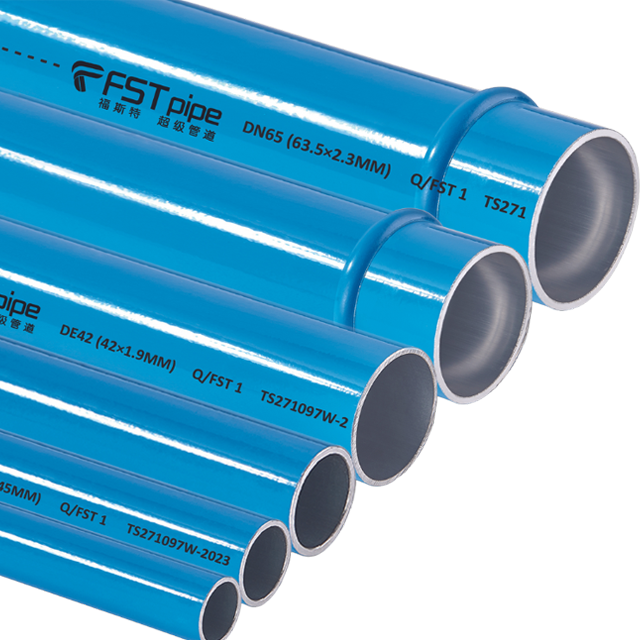
Selecting the right piping involves analyzing Total Cost of Ownership (TCO) and safety profiles. Aluminum offers a distinct balance compared to steel, plastic, or copper.
Carbon steel (Schedule 40) is the traditional choice. It has a higher ultimate burst pressure than aluminum. However, for standard plant air (100-125 PSI), this extra strength is often over-specification that adds no operational value. The downside of steel is flow efficiency. Steel rusts, creating rough internal surfaces that increase friction and pressure drop. Compressed Air Pipe made from aluminum maintains a smooth bore, ensuring the pressure generated at the compressor is delivered to the tool with minimal loss. Furthermore, aluminum uses mechanical fittings, eliminating the high labor costs associated with threading and welding steel.
The comparison between aluminum and PVC is not about efficiency; it is about safety. OSHA prohibits the use of PVC pipe for compressed air distribution above ground. The failure physics differ fundamentally. Aluminum is ductile; if it fails, it tears or splits. PVC is brittle. When pressurized gas expands, a PVC failure results in an explosion that sends sharp plastic shrapnel flying.
While PVC tubes may have a PSI rating stamped on them, that rating applies to static water pressure. Ultraviolet light from windows and synthetic compressor oils degrades PVC rapidly, making any printed pressure rating irrelevant over time. Aluminum does not suffer from this degradation.
Copper and aluminum share similar pressure capabilities in smaller diameters. Both are non-corrosive and provide clean air. However, copper requires soldering or brazing, which demands skilled labor and hot work permits. Copper is also significantly heavier and more expensive per foot. Aluminum acts as the value-engineered successor to copper, providing the same clean air benefits at a fraction of the installation time and material cost.
When selecting a piping system, engineers and plant managers must verify specific criteria to ensure the pressure ratings are legitimate and compliant.
Ensure the system meets ASME B31.3, the code for Process Piping. This standard dictates the safety factors and material quality required for industrial pressure vessels. For North American compliance, particularly in Canada, a CRN (Canadian Registration Number) is often essential. Third-party validations from bodies like UL or TUV add a layer of trust, verifying that the manufacturer’s pressure claims have been independently tested.
The exterior finish serves a functional purpose beyond aesthetics. The industry-standard "Blue" powder coat (or Aluminum Blue Pipe for Compressed Air) allows for immediate fluid identification. In a complex ceiling grid, Blue signals Air, Green signals Water, and Yellow signals Gas. This prevents accidental tapping into the wrong line. Additionally, anodizing or powder coating protects the pipe exterior from oxidation in humid plant environments.
Always review the warranty fine print. A robust warranty, often 10 years, should cover the fitting seal at maximum pressure. Some warranties only cover the aluminum tube integrity, which rarely fails. The seal is the active component holding the pressure; ensure the manufacturer stands behind it.
Even the highest-rated pipe can fail if installed incorrectly. Addressing these common risks ensures a successful rollout.
While aluminum holds static pressure well, it faces challenges with transient pressures. Sudden valve closures can send shockwaves through the system, known as "water hammer," causing pressure spikes far exceeding the working pressure. Systems should be sized to accommodate these spikes. Engineers often recommend installing soft-start valves or expansion tanks to absorb this energy.
Aluminum expands approximately twice as much as steel when heated. A long run of pipe installed in a hot facility will grow significantly. High pressure combined with the physical force of thermal expansion puts massive stress on fittings. Designing expansion loops or using flexible hoses at strategic points prevents fittings from being pulled apart or blown out.
A common error is over-paying for a system rated for 500 PSI when the plant compressors cut out at 125 PSI. This is ROI-negative. The value of a piping system lies in its Flow CFM capability—how much air it can move with minimal pressure drop—rather than excess PSI capacity you will never use. Focus on diameter and bore smoothness rather than chasing unnecessary pressure ratings.
While the raw material of aluminum can theoretically hold tens of thousands of PSI, Aluminum Air Pipe systems are precision-engineered products capped at safe, standardized working limits—typically around 232 PSI. This rating is calculated using rigorous safety factors to ensure reliability in dynamic industrial environments.
The true value of aluminum piping is not in holding extreme pressures, but in delivering consistent pressure with clean air and low installation costs. By understanding the relationship between diameter, temperature, and pressure ratings, facility managers can specify systems that are safe, compliant, and efficient.
Next Steps: Before selecting a piping schedule or alloy, conduct a compressed air audit. Determine your actual peak pressure and maximum ambient temperature. Use this data to select a system that meets your needs without unnecessary over-engineering.
A: The burst pressure is typically four times the rated working pressure. If a system is rated for 232 PSI, the theoretical burst pressure is generally over 900 PSI. This 4:1 safety ratio is required by industry standards like ASME to account for pressure spikes and long-term fatigue.
A: You can, but it is not recommended compared to proprietary systems. Generic Schedule 40 aluminum pipe requires threading or welding, which is labor-intensive. Proprietary "Blue Pipe" systems use 6063 aluminum with push-to-connect fittings, offering faster installation, better corrosion resistance, and verified pressure ratings for air.
A: Yes. Aluminum piping systems are derated as temperatures rise. A system rated for 232 PSI at 100°F may only be rated for ~180 PSI at 140°F. Always check the manufacturer’s temperature correction curve if your piping runs through hot boiler rooms or near ceilings.
A: Yes, the vast majority of industrial aluminum air pipe systems are rated for a Maximum Working Pressure (MWP) of at least 190 PSI, with most standardizing on 232 PSI (16 Bar). This safely covers standard commercial air requirements.
A: The blue color is an industry standard for identifying pipes carrying compressed air. It allows maintenance personnel to instantly distinguish air lines from water (green), fire suppression (red), or gas (yellow) lines, improving safety and maintenance speed.


