Views: 0 Author: Site Editor Publish Time: 2025-11-26 Origin: Site
Selecting the piping material for your facility is one of the most significant decisions you will make regarding your compressed air system. This choice directly impacts three critical business metrics: the safety of your workforce, the energy efficiency of your operations, and the quality of the air reaching your tools. For decades, the industry relied on labor-intensive threaded steel, accepting rust and pressure drops as the cost of doing business. However, modern manufacturing standards have shifted. Today, facility managers must evaluate piping based on a complex balance of installation speed, longevity, and total cost of ownership.
The goal of this evaluation is to determine which material provides the optimal performance for industrial applications. We will break down the technical differences between legacy materials and modern alloys. You will learn why 6063 aluminum has emerged as the industrial benchmark and, more importantly, which materials pose genuine safety risks that could lead to OSHA citations or catastrophic failure.
Safety First: PVC is strictly non-compliant for compressed air due to shatter/shrapnel risks; OSHA actively cites against it.
The Modern Standard: 6063 Aluminum Pipe is the current industry leader, offering zero corrosion, laminar airflow, and the lowest Total Cost of Ownership (TCO).
Legacy Issues: Black iron and galvanized steel suffer from internal scaling that increases energy costs and damages pneumatic tools.
Cost Reality: While aluminum material costs are higher than steel, the 50–70% reduction in installation labor makes it cheaper overall.
Before discussing the best materials, we must address the materials that should never be used in a compressed air system. Unlike water plumbing, compressed air stores a massive amount of potential energy. If a pipe fails, that energy releases instantaneously. This physical difference dictates which materials are safe and which are dangerous.
Polyvinyl Chloride (PVC) is commonly found in hardware stores, but it is fundamentally unsafe for compressed air. The physics are simple yet deadly: air is a compressible gas. When a PVC pipe creates a fracture under air pressure, it does not merely leak or split like it would with water. Instead, the stored energy causes the plastic to explode.
Upon rupture, PVC turns into high-velocity shrapnel. These plastic shards act like projectiles, capable of causing severe injury or blindness to anyone nearby. Because of this well-documented risk, the Occupational Safety and Health Administration (OSHA) actively restricts the use of PVC for above-ground compressed air transportation. Relying on PVC exposes your facility to significant liability and safety hazards.
PEX (cross-linked polyethylene) is excellent for residential water lines, leading many to assume it works for air. This is a common misconception. You must distinguish between "water pressure ratings" and "air pressure ratings." A pipe rated for 150 PSI of water may not safely hold 150 PSI of compressed air due to the energy dynamics mentioned earlier.
In industrial settings, PEX faces environmental challenges. It often lacks sufficient UV stability, leading to brittleness if exposed to sunlight near windows or skylights. Furthermore, compressor oils entrained in the airstream can degrade the chemical structure of PEX over time. Finally, PEX lacks rigidity. It tends to sag between supports, creating low points where moisture accumulates. These "water traps" restrict airflow and cause pressure issues downstream.
Galvanized steel is often mistaken for a corrosion-resistant option. While the zinc coating protects the outside, it presents a unique failure mode inside the pipe. Under the stress of compressed air and thermal cycling, the galvanized coating can flake off, a process known as delamination.
These metal flakes do not just disappear. They travel at high speeds through the system, becoming damaging projectiles. They eventually lodge inside expensive pneumatic valves, destroy cylinders, and ruin air tools. While the pipe itself may not burst, the debris it generates creates a maintenance nightmare for your production equipment.
For most of the 20th century, black iron and copper were the default choices for industrial air. While they are safer than plastic, they carry hidden costs and performance penalties that modern facilities try to avoid.
Black iron remains a common sight in older factories. Its primary advantages are high pressure ratings, widespread availability, and physical robustness. If you are running pipes through an area where forklifts might impact the line, the structural strength of schedule 40 steel is a benefit.
However, the hidden costs are substantial. Black iron begins to rust internally almost immediately after installation. This corrosion creates a rough internal surface that restricts airflow, acting like a brake on your system. This forces your compressor to work harder, increasing your energy bills year over year. Additionally, the rust scale eventually breaks loose, contaminating your final product.
Installation is another major drawback. Fitting black iron requires heavy threading equipment, skilled pipefitters, and significant physical labor. It is a slow, dirty process. Over time, the threaded connections are also prone to developing leaks as the thermal expansion and contraction loosen the joints.
Copper is the "clean" legacy option. It resists corrosion effectively and offers a smooth interior for good airflow. It is often found in medical or laboratory settings where air purity is paramount.
The downsides are largely economic and logistical. Copper is extremely expensive, and its price fluctuates wildly with the commodities market. Installation usually requires brazing or soldering. In many modern facilities, using an open flame requires "hot work permits" and fire watch protocols, which slows down the project. Furthermore, once a copper system is soldered in place, it is difficult to modify. If your production line changes, expanding a copper network is labor-intensive.
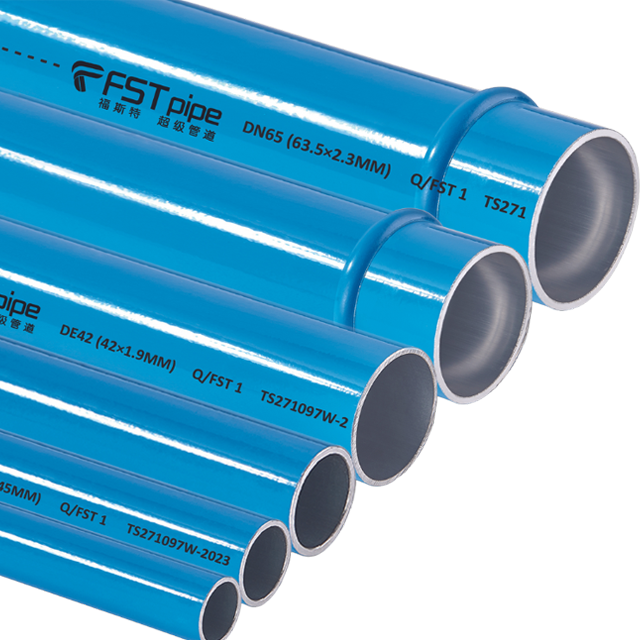
In the last two decades, aluminum has replaced steel as the benchmark for efficiency. Specifically, the 6063 Aluminum Pipe has proven to be the optimal alloy for compressed air distribution.
The 6063 alloy is a magnesium-silicon aluminum blend. It is often referred to as "architectural aluminum" because it offers an incredible balance of tensile strength and extrudability. Unlike generic aluminum, this specific alloy allows for the creation of perfectly round, seamless pipes that can withstand high pressures while remaining lightweight. It provides the durability of metal without the heavy lifting required for steel.
The most significant advantage of this material is Zero Corrosion. Even in the presence of moisture (condensate), 6063 aluminum does not rust or scale. This stability ensures that your system maintains compliance with ISO 8573-1 air quality standards indefinitely.
Additionally, the manufacturing process results in a mirror-smooth internal bore. This creates Laminar Flow, meaning the air moves in parallel layers with minimal turbulence. The friction coefficient is so low that pressure drop is virtually eliminated. This allows you to lower the set point on your compressor, resulting in direct energy savings.
When you select 6063 Aluminum Pipe for Compressed Air, you are also choosing a superior installation method. These systems weigh roughly one-third of their steel counterparts. This lightweight nature reduces the load on your roof truss and eliminates the need for heavy structural anchors.
Modularity is another key feature. These systems utilize push-to-connect or compression fittings. There is no threading, welding, or gluing required. A technician simply cuts the pipe, deburrs it, and pushes it into the fitting. This modularity means the system can be modified or expanded in minutes rather than days.
Unlike generic plumbing pipe, 6063 aluminum systems are often strictly calibrated for pneumatic efficiency. The sizing refers to the actual internal diameter, ensuring that flow calculations are accurate and that the pipe delivers the volume of air expected.
Facility managers often hesitate when looking at the material price of aluminum compared to black iron. It is true that the raw cost per foot of aluminum is higher. However, analyzing the Total Cost of Ownership (TCO) reveals a different story.
The cost of a piping project is the sum of materials plus labor. Installing threaded steel is one of the most labor-intensive tasks in mechanical construction. It involves measuring, cutting, threading, cleaning, sealing, and wrenching every single joint.
In contrast, installing a Compressed Air Pipe made of aluminum is incredibly fast. Crews can hang and connect hundreds of feet of pipe in a single day. Industry data consistently shows that aluminum systems reduce labor hours by 50% to 70%. When you factor in the high hourly rate of skilled labor, the total project cost for aluminum is often lower than steel.
The savings continue after installation. Aluminum systems typically use fittings with high-performance O-ring seals. These are far superior to the tapered thread seals of iron pipe, which inevitably begin to leak. Minimizing leaks reduces the "artificial load" on your compressor.
Furthermore, the energy bill impact is significant. Because the smooth bore of the pipe never corrodes, the flow efficiency remains high for decades. Steel pipes, by comparison, become narrower as they rust, restricting flow and forcing the compressor to work harder to maintain pressure. Over a 10-year period, the energy savings from aluminum often pay for the system entirely.
Even the best material will fail if the system is designed poorly. Two main factors determine the success of your layout: proper sizing and loop configuration.
Proper compressed air pipe sizing is less about pressure and more about velocity. If the pipe is too narrow, the air must travel faster to satisfy the demand. High velocity causes turbulence and friction, leading to pressure drop.
A good rule of thumb is that air velocity should not exceed 20 to 30 feet per second. If you undersize your main headers, downstream tools will "starve" for air during peak demand, causing pressure to fluctuate wildly. It is always cheaper to upsize the pipe during the design phase than to replace it later.
We highly recommend a "Ring Main" or Loop layout over a linear "Dead Head" design. In a linear system, air must travel from one end to the other; the station at the end of the line suffers the most pressure drop. In a Loop layout, air can travel in two directions to reach any point of use. This effectively doubles the capacity of the pipe and equalizes pressure across the entire facility.
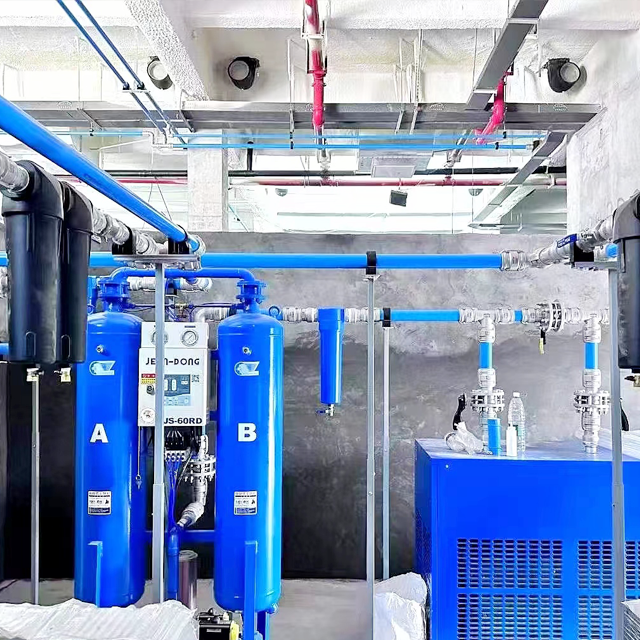
Modern aluminum piping comes in various colors for visual safety. The standard is blue for compressed air, green for nitrogen, and grey for vacuum. This allows maintenance teams and emergency responders to immediately identify the contents of a pipe, preventing dangerous mix-ups.
To help you make the final decision, we have categorized recommendations based on typical facility types.
| Application / Facility | Recommended Material | Primary Reason |
|---|---|---|
| Home Garage / Light Hobbyist | HDPE with Aluminum core or simple Aluminum kits | Safe, semi-flexible, and DIY-friendly installation. |
| General Manufacturing | 6063 Aluminum Pipe | Best balance of TCO, adaptability, and air quality. |
| Pharma / Food / Clean Room | Stainless Steel (304/316) or High-Grade Aluminum | Must meet wash-down requirements and strict purity standards. |
| Heavy Fabrication / Foundry | Black Iron or Heavy-Wall Aluminum | External physical damage risks require high structural strength. |
The evolution of compressed air piping has moved away from heavy, rusting steel toward cleaner, more efficient materials. While black iron served the industry for decades, 6063 Aluminum Pipe is the clear winner for modern facilities. It delivers superior energy efficiency, ensures safety, and offers a modularity that keeps pace with changing production needs.
We must reiterate the most critical warning: never use PVC for compressed air. The risk of explosion and injury is simply too high, and the potential liability outweighs any short-term cost savings. As you plan your next system, look beyond the price per foot. We encourage you to audit your current system for pressure drops and calculate the Total Cost of Ownership. You will likely find that investing in a high-quality aluminum system pays for itself through reduced labor and lower energy bills.
A: PVC is brittle and prone to shattering under pressure. Because air is a compressed gas, it stores potential energy. If a PVC pipe fractures, this energy releases instantly, turning the plastic shards into dangerous, high-velocity shrapnel. OSHA explicitly prohibits the use of PVC for above-ground compressed air transportation due to this severe safety risk.
A: Generally, PEX is not recommended for industrial compressed air. While some DIYers use it, PEX is primarily rated for water pressure, not air. It lacks rigidity, leading to sagging and moisture traps, and it can degrade when exposed to UV light or compressor oils. It is not suitable for professional or permanent industrial installations.
A: Aluminum piping systems are designed to last for decades. Unlike steel, which begins to rust immediately, aluminum is corrosion-resistant. It maintains its structural integrity and smooth internal bore indefinitely, provided it is not subjected to chemicals or environments outside its rating.
A: Yes, significantly. If pipes are undersized, the air velocity increases, causing friction and pressure drop. This forces the air compressor to run at a higher set pressure to compensate, which consumes more electricity and increases wear on the equipment. Proper sizing is essential for energy efficiency.