Views: 0 Author: Site Editor Publish Time: 2026-04-27 Origin: Site
A well-designed compressed air piping system is the backbone of an efficient industrial air network. No matter how advanced the compressor may be, poor piping design can lead to pressure loss, air leaks, unstable flow, condensate problems, high operating costs, and frequent maintenance issues. In many factories, the piping network is often treated as a secondary consideration, but in reality it has a direct impact on productivity, energy consumption, equipment lifespan, and air quality.
Designing a reliable compressed air system is not simply about connecting pipes from the compressor room to the workshop. It requires a full understanding of airflow demand, pressure requirements, plant layout, future expansion, pipe material selection, moisture management, safety standards, and maintenance accessibility. A carefully planned system ensures that compressed air reaches every point of use at the correct pressure and quality level, while minimizing waste and long-term operating costs.
In this article, we will explain how to design a compressed air piping system step by step, covering the key technical and practical considerations that help create a durable, efficient, and scalable solution for industrial applications.
Before choosing pipe sizes or drawing routing plans, it is essential to understand what the system is expected to do. A compressed air piping system transports air from the compressor source to production equipment, tools, automation lines, packaging stations, and other application points. The design must match the real operating conditions of the facility.
Different industries use compressed air in very different ways. For example, electronics and pharmaceutical facilities usually require clean, dry, oil-free air with strict pressure stability. Furniture, printing, and automotive plants may need high-flow air distribution over wide workshop areas. Food processing facilities may also require corrosion-resistant materials and hygienic design. Because of these differences, there is no one-size-fits-all layout.
A good design begins with answering several questions:
You need to identify the total air consumption of all equipment, machines, and workstations. This includes both continuous-use equipment and intermittent-use tools. Peak demand and simultaneous usage must be considered, not just average consumption.
Machines often require a specific minimum operating pressure. If the compressor provides air at one pressure but excessive pressure drops occur along the piping route, the end user may not receive enough pressure to operate properly.
Not all applications require the same level of filtration or dryness. Some general industrial uses can tolerate standard dry compressed air, while others demand extremely low moisture and contamination levels. The piping system must support the required air treatment strategy.
A compressed air piping system should not only meet today’s needs but also allow room for future equipment additions, production line changes, or plant expansion. Designing only for current demand may create expensive rework later.
Accurate flow calculation is one of the most important steps in designing a compressed air piping system. Undersized pipes create friction losses and pressure drop, while oversized systems increase material costs unnecessarily.
Start by listing all air-consuming devices and their required flow rates, usually expressed in CFM, L/min, or m3/min. Then determine:
The number of devices operating at the same time
Peak load periods
Average demand over a shift
Sudden high-demand events
Reserve capacity for future use
A common mistake is simply adding the maximum flow of every machine and designing for that total. In many factories, not all equipment runs at maximum consumption simultaneously. However, it is equally risky to underestimate usage. A practical design usually includes a reasonable safety margin to absorb fluctuations and future expansion.
Some workstations may operate only occasionally, while automated lines may consume air continuously. This usage diversity affects main header sizing and branch pipe design.
Many designers focus too much on compressor size and not enough on end-use demand. The piping system should be based on how air is used across the facility, not just on the compressor nameplate.
One of the main goals when learning how to design a compressed air piping system is controlling pressure drop. Every bend, fitting, valve, filter, dryer, and pipe length creates resistance. Excessive resistance forces the compressor to work harder, increasing energy cost.
In general, a well-designed system aims to keep pressure loss as low as possible between the compressor room and the point of use. Even a small pressure drop can significantly affect overall efficiency, especially in large plants.
Pipe size has a direct influence on air velocity and friction loss. If the diameter is too small, air speed becomes too high, which increases pressure loss and noise. Proper pipe sizing reduces resistance and allows stable flow distribution.
Every elbow, tee, reducer, and quick connector adds resistance. Straight, simple routing is always better than a complicated path with multiple direction changes.
The longer the pipeline, the greater the pressure drop. Equipment placement and compressor room location should be evaluated as part of system planning.
Pipe materials with smooth inner walls help reduce friction and improve flow efficiency over time. Corroded or rough interior surfaces will gradually worsen pressure performance.
The layout of a compressed air piping system determines how evenly air is distributed and how reliable the supply remains during varying production conditions.
There are several common layout approaches, but not all offer the same performance.
A dead-end layout sends air in one direction from the main header toward the end of the line. This is simple and may be suitable for small installations, but it often causes uneven pressure at distant points and offers less flexibility.
A loop or ring main layout is often the preferred solution for medium and large facilities. In this design, air can flow from multiple directions to reach a point of use. This helps balance pressure, reduce drop, and improve supply stability.
A loop system also offers operational advantages during maintenance. One section can often be isolated without shutting down the entire plant.
Some factories use a loop main header combined with branch drops to workstations or production cells. This creates a good balance of performance, efficiency, and installation practicality.
For most industrial applications, a loop design is the more efficient long-term choice, especially when the facility has multiple departments or a large floor area.
Material selection is critical in a compressed air piping system because it affects durability, installation speed, pressure performance, maintenance, corrosion resistance, and air quality.
Different materials are available in the market, but they are not equally suitable for modern industrial compressed air networks.
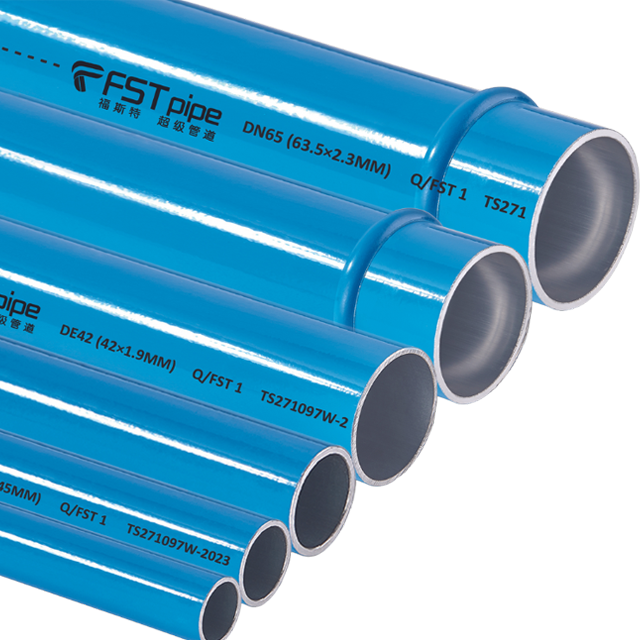
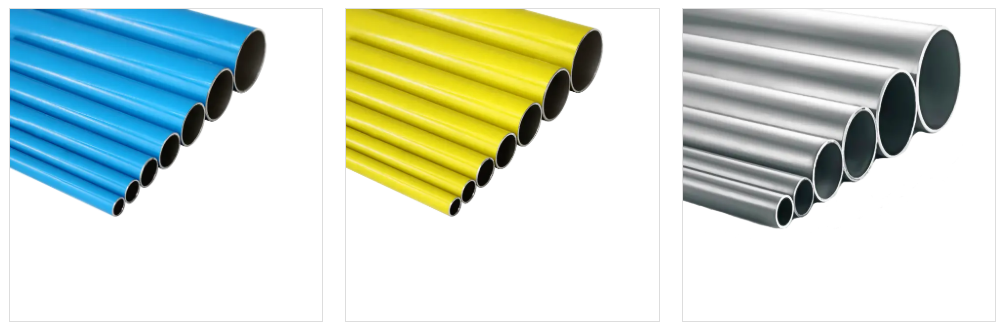
Aluminum alloy piping is widely recognized as an excellent solution for compressed air systems. It is lightweight, corrosion-resistant, smooth inside, and easy to install. The low internal roughness helps maintain efficient airflow and low pressure drop.
Aluminum systems are also modular, which makes them easy to expand or reconfigure when production changes.
Stainless steel is highly durable and offers excellent corrosion resistance. It is especially suitable for environments with strict cleanliness requirements or harsh conditions, such as food, pharmaceutical, electronics, and specialty gas applications.
Although stainless steel may involve higher initial cost, it provides long service life and strong performance in demanding applications.
These materials have been used traditionally, but they may present disadvantages such as corrosion, heavier weight, more difficult installation, and possible contamination from rust or scale over time. In modern high-efficiency systems, many users are shifting toward aluminum alloy or stainless steel solutions.
Some plastic piping options may be used in certain low-pressure or specialized cases, but not all are suitable or safe for compressed air systems. Material selection should always follow local codes, pressure ratings, and industrial safety requirements.
Air velocity is often overlooked in system design, yet it has a strong impact on efficiency and stability. If air travels too fast, the system may suffer from turbulence, noise, friction loss, and water carryover.
In the main header, moderate air velocity helps maintain balanced delivery. In branch lines, sizing should match the local demand without causing unnecessary restriction.
When velocity is too high, the system experiences:
Higher pressure drop
More noise and vibration
Greater stress on fittings
Increased turbulence
More difficulty separating condensate
The best way to control air velocity is through proper pipe sizing and layout design. Trying to compensate for poor pipe design by increasing compressor pressure only wastes energy.
Compressed air always contains moisture unless it is fully treated. As air cools in the piping network, water can condense inside the system. If moisture is not properly managed, it can cause corrosion, product contamination, tool damage, and process interruptions.
A good compressed air piping system must include condensate management as a core design feature, not as an afterthought.
Dryers, filters, separators, and drains should be placed where they can effectively remove moisture and contaminants before air enters the distribution network.
Main lines are often installed with a slight slope in the direction of flow or toward designated drain points. This encourages condensate to move toward collection and removal areas rather than pooling inside the system.
Point-of-use connections should not be taken directly from the bottom of the main line. Instead, a proper drop leg design helps prevent water from entering equipment.
Low points in the system should include drains or automatic condensate removal devices. Without proper drainage, even a well-sized system can suffer from water-related performance issues.
The way air is taken from the main header to each workstation matters greatly. Poor drop design can introduce water, dirt, and unstable pressure into sensitive equipment.
A common best practice is to connect branch lines from the top or side of the main pipe rather than the bottom. This reduces the chance of carrying condensate directly into the branch.
Each vertical drop can include a leg extending below the connection point with a drain at the bottom. This allows moisture and debris to collect before reaching filters, regulators, and tools.
Filter, regulator, and lubricator assemblies, where needed, should be located near the equipment to provide final pressure and air quality control.
A compressed air piping system should be easy to service without shutting down the entire production facility. This can be achieved by dividing the network into zones and using isolation valves strategically.
If one production area needs maintenance, repair, or expansion, you can isolate only that section and keep the rest of the plant running. This reduces downtime and improves maintenance safety.
Valves should be installed at key locations such as:
Main branch takeoffs
Production area entrances
Equipment groups
Future expansion connection points
This approach also supports phased construction and simplifies troubleshooting.
One of the smartest principles in learning how to design a compressed air piping system is to think beyond immediate installation. Many factories increase production capacity, add machines, or reconfigure layouts over time.
A system that cannot expand easily will become a long-term operational limitation.
In some cases, it is practical to size the main header slightly larger than current demand requires. This provides flexibility for future growth without replacing the backbone of the network.
Adding planned connection ports or capped branches can make future expansion much easier and faster.
Modular aluminum alloy and stainless steel systems are especially suitable for future adaptation because they are easier to extend and modify than traditional heavy welded systems.
Compressed air is one of the most expensive forms of energy used in industry. A badly designed piping system increases operating pressure requirements, leaks more air, wastes more electricity, and shortens equipment life.
An energy-efficient compressed air piping system is not only a technical benefit but also a direct financial advantage.
Leaks often occur at joints, connectors, old valves, and poorly assembled sections. Pipe material quality and installation method both influence leakage performance.
When system pressure fluctuates, production equipment may perform inconsistently, and operators may compensate by increasing compressor settings. Good piping design helps maintain stable delivery pressure.
Oversized or poorly placed filters and dryers can create avoidable pressure losses. The treatment train must be integrated with the piping design, not treated separately.
Even the best design can fail if installation is poor. Proper support spacing, alignment, sealing, joint assembly, and routing discipline are all essential for long-term performance.
Compressed air pipes must be securely supported to avoid sagging, vibration, and stress at joints.
Pipes should be kept clean before assembly. Dirt, metal fragments, and sealing debris left inside the system can contaminate downstream equipment.
Pressure testing, leak testing, and performance checks should be completed before the system is placed into full production use.
Any compressed air piping system must comply with local regulations, pressure safety standards, and industry-specific requirements. Material pressure ratings, joint reliability, support methods, and installation practices must all meet applicable codes.
Safety also includes operational factors such as clearly labeled lines, controlled isolation procedures, pressure relief protection, and safe access for maintenance.
When designing the system, engineers should consider not only present operating pressure but also abnormal conditions, emergency isolation, and long-term inspection requirements.
Designing an efficient compressed air piping system requires both engineering knowledge and practical field experience. A successful project usually involves more than theoretical calculations. It also depends on real-world understanding of installation conditions, workshop operation, airflow behavior, and maintenance needs.
Professional support can help with:
Site survey and measurement
Flow and pressure analysis
Pipe routing optimization
Material selection
Expansion planning
Installation guidance
System commissioning
This reduces the risk of underperforming systems and ensures that the final solution supports both technical reliability and commercial value.
Many compressed air systems underperform because of avoidable design errors. Knowing these common mistakes can help improve both new projects and retrofit plans.
This is one of the most frequent and costly errors. Small pipes increase pressure drop and force the compressor to work harder.
A system designed only for today can quickly become insufficient after production expansion.
Too many bends, long detours, and disorganized layouts reduce system efficiency.
Without slope, drains, and proper air treatment, water problems will eventually appear.
The wrong material may corrode, contaminate air, or become expensive to maintain.
If valves, drains, and treatment components are hard to reach, maintenance becomes inefficient and costly.
Designing a high-performance compressed air piping system requires much more than selecting pipes and fittings. It involves understanding real air demand, choosing the right layout, controlling pressure drop, selecting suitable materials, managing moisture, ensuring maintainability, and preparing for future expansion. A properly designed system can improve production stability, reduce energy costs, extend equipment life, and provide cleaner, more reliable compressed air throughout the facility.
For companies seeking a dependable industrial pipeline solution, working with an experienced supplier is an important part of success. FSTpipe, founded in 2014 in Foshan, Guangdong, specializes in comprehensive solutions for industrial gas and pressure pipeline systems. With aluminum alloy and stainless steel pipeline systems, professional technical teams, and experience serving industries such as electronics, automotive, food, medicine, furniture, and aerospace, FSTpipe provides support from site survey and design to installation consultation and system optimization. For businesses looking to build a more efficient and reliable compressed air piping system, FSTpipe offers practical expertise and integrated pipeline solutions.
For most medium and large factories, a loop layout is often the best option because it provides more balanced airflow, lower pressure drop, and better flexibility during maintenance. Small systems may use a dead-end design, but loop systems generally perform better over time.
Aluminum alloy and stainless steel are both excellent choices. Aluminum alloy is lightweight, corrosion-resistant, and easy to install, while stainless steel is ideal for demanding environments requiring superior cleanliness and durability.
You can reduce pressure drop by using the correct pipe diameter, shortening pipe runs where possible, minimizing bends and fittings, choosing smooth internal pipe materials, and maintaining proper air treatment equipment.
Condensate can cause corrosion, contamination, tool damage, and production problems. Proper drainage, pipe slope, drop-leg design, and air drying equipment help keep moisture under control and protect system performance.
Yes. A good system should include some allowance for future equipment additions or production changes. Slightly larger mains, reserved outlets, and modular piping solutions can make expansion easier and more cost-effective.