Views: 0 Author: Site Editor Publish Time: 2026-04-23 Origin: Site
A reliable compressed air piping system is one of the most important parts of any industrial air network. Many factories invest heavily in compressors, dryers, filters, and control equipment, but the piping system itself often determines whether the entire setup will perform efficiently over the long term. Even if the compressor is high quality, the wrong piping material can lead to pressure drop, internal corrosion, condensate buildup, leaks, contamination, difficult maintenance, and unnecessary energy costs.
This is why one of the most common questions in industrial plant design is: what type of piping is used for compressed air? The answer depends on several factors, including operating pressure, air quality requirements, installation environment, maintenance expectations, budget, and future expansion plans. Different pipe materials have different strengths and limitations, and choosing the correct one has a direct effect on system reliability and operating efficiency.
In modern industry, compressed air is widely used in automotive production, electronics, pharmaceuticals, food processing, furniture manufacturing, textiles, packaging, and many other sectors. Because compressed air is often called the “fourth utility,” the piping network that delivers it must be treated as a core infrastructure system. A poorly selected pipe material can reduce productivity and increase total operating cost, while a well-designed compressed air piping system can improve airflow stability, reduce leakage, and support long-term plant growth.
This article explains the main types of piping used for compressed air, their advantages and disadvantages, and how to choose the right material for different industrial applications.
When people think about compressed air efficiency, they often focus on the compressor itself. However, the piping material has a major impact on how effectively air moves from the compressor room to the point of use. The pipe network is not simply a passageway. It affects pressure retention, air cleanliness, moisture control, installation speed, durability, and maintenance workload.
A compressed air piping system is expected to deliver air at the right pressure and quality to every workstation. If the inner surface of the pipe becomes rough, corroded, or contaminated over time, airflow resistance increases. That means higher pressure drop, reduced machine performance, and higher energy consumption. In many cases, operators respond by increasing compressor discharge pressure, which leads to even higher electricity costs.
The pipe material also influences safety and service life. Compressed air systems operate under pressure, and the pipework must withstand both daily load and long-term wear. It must also remain stable in the plant environment, whether that means exposure to humidity, dust, chemicals, or frequent temperature variation.
For these reasons, selecting the proper pipe type is not just a purchasing decision. It is a strategic design choice for the entire compressed air infrastructure.
There are several materials commonly used in a compressed air piping system. Some are traditional choices that have been used for decades, while others are modern engineered systems designed specifically for industrial compressed air distribution.
The main types include:
Aluminum piping
Stainless steel piping
Carbon steel or black steel piping
Galvanized steel piping
Copper piping
Plastic piping in certain applications
Each of these materials offers a different balance of performance, cost, installation complexity, and durability.
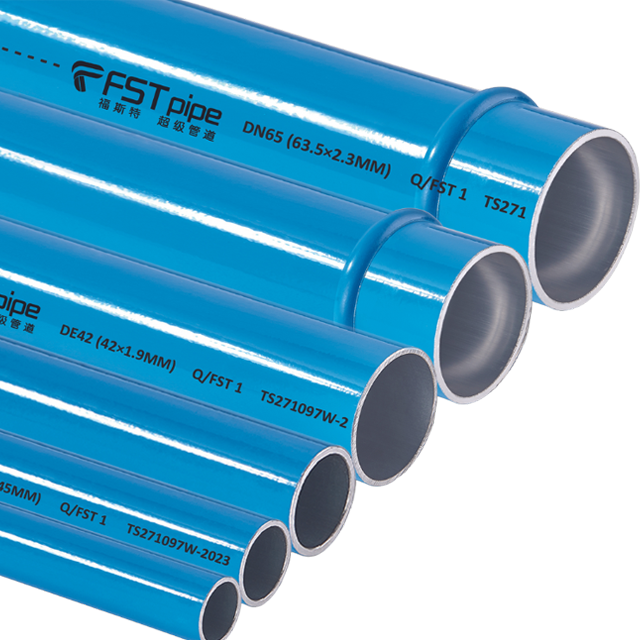
Aluminum has become one of the most popular choices for modern compressed air systems, especially in industrial facilities that want efficient airflow, clean internal surfaces, and easy installation.
Aluminum piping is lightweight, corrosion-resistant, and smooth on the inside. These characteristics make it highly suitable for compressed air distribution. The smooth internal bore minimizes friction loss, which helps reduce pressure drop and improve the overall energy efficiency of the compressed air piping system.
Because aluminum is much lighter than steel, installation is also faster and easier. Many aluminum pipe systems are modular and use mechanical fittings that simplify assembly, expansion, and maintenance. This is especially useful in factories where production lines may change over time.
One of the biggest advantages of aluminum is that it does not rust like traditional steel piping. In compressed air applications, rust and scale can contaminate the air and reduce flow performance over time. Aluminum helps avoid these problems while maintaining a clean internal surface.
Another major benefit is flexibility. Aluminum systems are often designed as modular pipeline systems, allowing users to add new branches, equipment drops, or loop connections without major reconstruction. This makes them ideal for facilities expecting future expansion.
In addition, aluminum piping usually provides a professional and clean appearance, which is attractive in well-organized industrial plants and production areas where system visibility matters.
Although aluminum performs very well, it may have a higher initial material cost than some traditional piping options. However, the total installed cost and long-term energy savings often make it a very competitive solution.
In most modern industrial settings, aluminum is considered one of the best choices for a high-performance compressed air piping system.
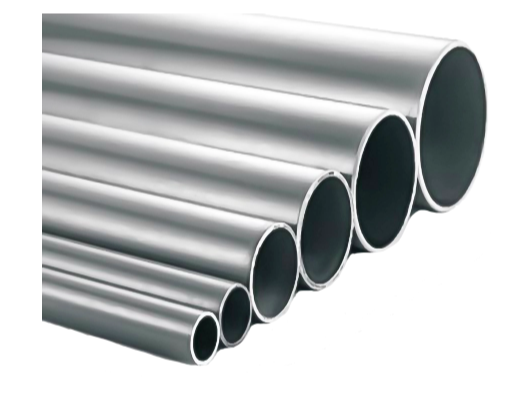
Stainless steel is another excellent material used in compressed air systems, particularly in industries where air purity, corrosion resistance, and long service life are critical.
Stainless steel piping is often selected in food processing, pharmaceuticals, electronics, laboratories, medical environments, and other industries with strict cleanliness requirements. It is also suitable in corrosive environments where standard steel piping may deteriorate more quickly.
Because stainless steel has strong resistance to oxidation and corrosion, it helps maintain air quality and system reliability over time. This makes it especially valuable for plants that cannot tolerate contamination risks.
Stainless steel offers excellent durability and mechanical strength. It performs well under pressure and in demanding industrial conditions. Its resistance to corrosion also means the inside of the pipe remains cleaner for longer, which helps protect air quality and preserve system efficiency.
Another advantage is its suitability for specialized gas systems in addition to compressed air. For facilities that handle multiple utility gases, stainless steel can support a wider range of applications.
The main drawback of stainless steel is cost. Material cost is higher than many alternatives, and installation may require more labor depending on the jointing method. Even so, in environments where cleanliness and durability are essential, stainless steel remains one of the best long-term investments.
Black steel, also called carbon steel pipe, has long been used in industrial piping networks, including compressed air systems. It is strong and widely available, and many older factories still rely on black steel air lines.
Black steel became common largely because it is mechanically strong and relatively familiar to industrial contractors. In the past, it was often chosen for large distribution lines where toughness and availability were key concerns.
The main disadvantage of black steel in a compressed air piping system is internal corrosion. Compressed air systems often contain moisture, especially if drying and condensate control are not perfect. Over time, moisture can cause rust to form inside black steel pipes. That rust can flake off, contaminate equipment, clog filters, and increase flow resistance.
As the pipe interior becomes rougher, pressure drop increases and the system becomes less efficient. Maintenance demands also rise. In applications where air cleanliness matters, black steel is no longer considered the ideal solution.
Some facilities still use black steel for main headers or heavy-duty industrial lines, especially where budgets are tight and contamination is not a major concern. However, many companies modernizing their compressed air piping system are replacing black steel with aluminum or stainless steel.
Galvanized steel pipe is steel pipe coated with zinc to resist corrosion. It was once considered an improvement over black steel for compressed air systems because the coating provided additional protection.
Compared with black steel, galvanized steel offers better resistance to rust, at least in the early stages of service life. This made it attractive in systems where moisture exposure was expected and users wanted better durability than untreated carbon steel.
Despite its corrosion-resistant coating, galvanized steel is not always the best long-term choice for compressed air. Over time, the zinc layer may degrade, and internal scaling or particle formation can still occur. In some cases, pieces of coating or corrosion byproducts can enter the air stream, which is not desirable for clean industrial processes.
Galvanized pipe is also heavy and generally more labor-intensive to install than modern modular systems. For this reason, while it may still be found in older systems, it is often not the first choice for new high-efficiency compressed air installations.
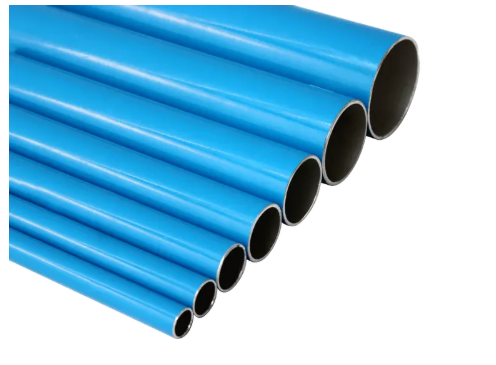
Copper has also been used in compressed air applications, particularly in smaller systems or specialized environments.
Copper resists corrosion better than black steel and has a relatively smooth inner surface. It is also easier to cut and join than many steel options. In some light industrial or commercial compressed air systems, copper can provide reliable service and good air quality.
Because copper does not rust, it is often viewed as cleaner than traditional steel piping.
The main disadvantage of copper is cost, especially in larger industrial systems. Material prices can be relatively high, making large-scale installations expensive. Copper may also be less practical in facilities with extensive distribution networks or frequent layout changes.
For this reason, copper is less commonly used today in large industrial compressed air piping systems, where aluminum often provides similar cleanliness advantages with better scalability and easier system modification.
Plastic piping is sometimes used in certain air distribution applications, but it must be approached carefully.
Some engineered plastic piping systems are designed and rated for compressed air use. These may be acceptable in certain light-duty applications when they meet pressure and safety standards. However, not all plastic pipes are suitable for compressed air.
Compressed air stores energy, and if a pipe fails under pressure, the result can be dangerous. Some plastic materials may become brittle with age, sunlight exposure, oil contamination, or temperature changes. If they crack or burst, the failure mode may be unsafe.
This is why standard plumbing plastic should never be assumed suitable for compressed air. Material selection must always follow manufacturer ratings and local safety regulations.
Engineered plastic may be used in limited or specialized systems, but in most industrial settings, aluminum and stainless steel remain the more trusted choices for long-term compressed air reliability.
The question is not only what types of piping can be used, but which one is most appropriate for your specific compressed air piping system. Material selection should be based on application conditions, not just on initial purchase price.
If the compressed air is used in food, pharmaceutical, electronics, or clean manufacturing environments, corrosion-resistant and contamination-resistant materials such as stainless steel or aluminum are often the best options.
If the installation area is humid, corrosive, or exposed to chemicals, the piping must withstand those conditions without rapid deterioration. Stainless steel performs well in harsh environments, while aluminum also offers strong corrosion resistance in many industrial settings.
In a factory where production lines may change, modular piping is highly valuable. Aluminum systems are especially useful here because they are light, easy to modify, and fast to install.
A cheaper pipe material may appear attractive at the beginning, but if it causes corrosion, leaks, contamination, and pressure drop, the long-term cost can be much higher. Energy efficiency and maintenance cost should always be included in the decision.
As compressed air systems become more performance-focused, many companies are moving away from traditional steel piping and choosing engineered aluminum or stainless steel systems instead.
These materials offer clear advantages:
Better corrosion resistance
Cleaner internal surfaces
Lower pressure drop
Easier installation
Better air quality
Simpler future expansion
Longer service life
In modern manufacturing, efficiency and reliability are just as important as initial investment. That is why aluminum and stainless steel are increasingly recognized as the preferred materials for a high-quality compressed air piping system.
Although pipe material is critical, it is not the only factor that affects system performance. Even the best material can underperform if the system is poorly designed.
Undersized pipe creates unnecessary pressure drop. The system must be sized based on actual flow demand, pressure requirement, and future expansion potential.
Loop layouts usually provide more balanced pressure than dead-end systems. Reducing unnecessary bends and long pipe runs can also improve efficiency.
Even corrosion-resistant pipes need proper condensate management. Main line slope, drains, drop legs, filters, and dryers all play important roles.
Improper support, poor joint assembly, and contamination during installation can reduce the reliability of the entire compressed air piping system.
Choosing the wrong material often comes from focusing too narrowly on one factor while ignoring the broader system requirements.
Low upfront cost does not always mean good value. If the pipe corrodes, leaks, or requires constant maintenance, the total cost will be much higher.
Some factories install a system for today’s layout and then struggle when production expands. A modular and scalable piping material can save major reconstruction later.
Not every pipe that can carry water can safely carry compressed air. Pressure rating, safety, and compatibility must always be verified.
If the application needs clean, dry, stable air, the pipe material must help support that requirement, not undermine it.
So, what type of piping is used for compressed air? Several types can be used, including aluminum, stainless steel, black steel, galvanized steel, copper, and some engineered plastics. However, not all of them offer the same level of performance. For modern industrial use, aluminum and stainless steel are often the most reliable and efficient choices because they provide corrosion resistance, smooth airflow, clean internal surfaces, and easier long-term maintenance. Traditional materials like black steel and galvanized steel may still exist in older facilities, but they often come with higher risks of corrosion, contamination, and pressure loss over time.
Choosing the right piping for a compressed air piping system requires a full understanding of air quality requirements, operating conditions, system layout, maintenance expectations, and future expansion. A properly selected and well-designed piping system can improve production stability, reduce energy waste, and increase the service life of the entire compressed air network. For companies seeking dependable industrial gas and pressure pipeline solutions, FSTpipe provides professional support with aluminum alloy and stainless steel pipeline systems, backed by technical expertise in design, production, sales, and installation. With experience serving industries such as electronics, automotive, food, medicine, furniture, and aerospace, FSTpipe helps customers build safer, cleaner, and more efficient compressed air pipeline systems.
In many modern industrial applications, aluminum and stainless steel are considered the best materials. Aluminum is lightweight, corrosion-resistant, and easy to install, while stainless steel offers exceptional durability and cleanliness for demanding environments.
Yes, black steel can be used, and it has been used in many traditional systems. However, it is prone to internal rust and corrosion, which can lead to contamination, pressure drop, and higher maintenance over time.
Galvanized pipe offers better corrosion resistance than black steel, but it can still degrade internally over time. In many modern installations, it is no longer the preferred option compared with aluminum or stainless steel.
Only certain engineered plastic piping systems that are specifically rated for compressed air should be considered. Standard plastic plumbing pipe should not be used unless it is clearly approved for compressed air service and complies with safety regulations.
Aluminum piping is popular because it combines low weight, easy installation, corrosion resistance, smooth internal surfaces, low pressure drop, and simple future expansion. These benefits make it highly suitable for modern compressed air piping system design.