Views: 0 Author: Site Editor Publish Time: 2026-09-24 Origin: Site
Industrial vacuum systems demand strict precision. They are highly sensitive to pressure drops and micro-leaks. This makes your choice of piping material and layout critical to operational efficiency. Traditional materials like steel or PVC were once the standard for these networks. However, they carry significant hidden risks. Steel introduces friction and rust. PVC poses serious safety hazards under negative pressure. Aluminum has rapidly emerged as the preferred choice for modern facilities. It offers a superior strength-to-weight ratio. It also features minimal internal friction. This guide covers the technical and operational criteria you need. We will explore how to design a reliable vacuum network. You will learn about precise sizing, component selection, flow dynamics, and vendor evaluation. By the end, you will understand how to build a resilient system. You can optimize pump performance and eliminate hazardous leaks.
Material Superiority: The smooth internal bore of aluminum prevents the friction and debris buildup that degrade vacuum efficiency in traditional steel systems.
Alloy Selection: Specifying a 6063 aluminum vacuum pipe provides the optimal balance of structural rigidity, corrosion resistance, and extrusion precision.
System Integrity: Standardizing high-quality vacuum pipe fittings is the single most effective way to prevent costly leak-induced energy waste.
Selecting the right material sets the foundation for your entire network. Many legacy systems still rely on outdated materials. However, modern engineering standards demand better performance. You must validate your material choices against strict success criteria. We can define these criteria by looking at safety, efficiency, and longevity.
Many older facilities utilized PVC for industrial vacuum piping due to its low initial price. This presents a massive operational risk. PVC is inherently brittle. It degrades rapidly when exposed to ultraviolet light, compressor oils, or temperature fluctuations. Under high vacuum pressure, PVC carries a severe risk of catastrophic implosion. Shards of plastic can act as dangerous projectiles. OSHA compliance standards often penalize or restrict the use of PVC in exposed compressed air or vacuum environments. You should avoid plastics for any critical industrial application.
Black iron and galvanized steel remain common, but they fail to support efficient vacuum flow. Steel suffers from internal corrosion. Over time, moisture inside the lines causes rust. This corrosion creates flaking debris. When debris travels backward under vacuum pressure, it enters your vacuum pumps. This destroys pump vanes and ruins expensive internal components. Steel is also exceptionally heavy. It requires complex rigging, heavy machinery, and specialized hanging hardware. Furthermore, the rough internal surfaces of steel pipes create turbulent flow. This turbulence causes a massive pressure drop across long distances.
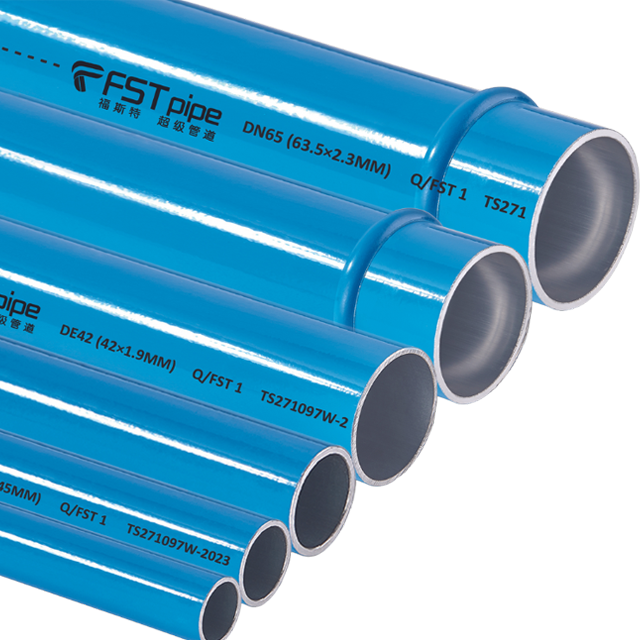
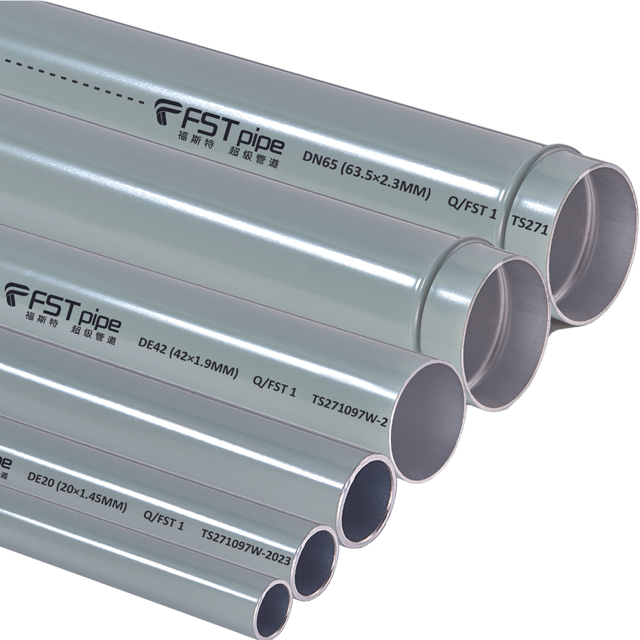
Aluminum solves the fundamental flaws of legacy materials. It offers exceptional corrosion resistance. The internal walls will never rust or flake. This protects your sensitive vacuum pumps from debris ingestion. Aluminum is also significantly lighter than steel. You can install it faster, requiring fewer laborers and lighter support structures. The most crucial operational benefit is the consistently smooth interior wall. A smooth bore maintains laminar flow. Laminar flow reduces friction, minimizing pressure drop across the entire network.
Not all aluminum is identical. The industry standard relies on specific metallurgical properties. Specifying a 6063 aluminum vacuum pipe guarantees optimal performance. The 6063 alloy blends aluminum with magnesium and silicon. This combination provides excellent extrusion precision. Manufacturers can create perfectly round pipes. Roundness is critical for securing a perfect seal at connection points. The 6063 alloy also boasts high tensile strength and superior resistance to environmental corrosion. It strikes the perfect balance between workability and structural rigidity.
Material selection is only the first step. The physical layout dictates how efficiently your pumps operate. Poor layout geometry restricts airflow. A well-designed vacuum piping system requires careful calculation. You must account for sizing, friction loss, and future expansion.
Undersized pipes choke vacuum systems. Oversized pipes waste capital. You must size the pipe correctly based on engineering data. Gather the target CFM (Cubic Feet per Minute) required by your machinery. Measure the total length of the intended run. Determine your maximum allowable pressure drop. Finally, identify your operating vacuum level, typically measured in Torr or inHg (inches of mercury). Deeper vacuum levels demand larger pipe diameters to handle the expanded volume of rarefied air. Consult empirical flow charts specific to aluminum to finalize your diameter.
Every turn in your pipe network introduces friction. Friction restricts flow and lowers system efficiency. You should design layouts with the fewest possible directional changes. When turns are unavoidable, recommend sweeping bends over sharp 90-degree elbows. A sharp elbow creates sudden turbulence. A sweeping bend gently redirects the air, preserving laminar flow. Install drop lines using 45-degree angles rather than abrupt perpendicular intersections whenever possible.
Network geometry dictates pressure distribution. You generally have two choices: closed-loop ring mains or dead-end linear runs. A closed-loop design feeds air from multiple directions. This equalizes pressure across the entire facility. It also offers redundancy. If you need to isolate one section for maintenance, the rest of the loop continues operating. Linear layouts branch out like a tree. They are cheaper upfront but suffer from pressure degradation at the furthest endpoints. Use closed loops for large facilities. Reserve linear runs for small, concentrated machinery clusters.
Table: Vacuum Layout Geometry Comparison
Layout Type | Pressure Distribution | Redundancy | Best Use Case |
|---|---|---|---|
Closed-Loop Ring Main | Excellent and equalized | High (can isolate sections) | Large facilities, dispersed equipment |
Linear Dead-End Run | Degrades at the furthest points | None | Small shops, single-machine runs |
Facilities grow. Production lines expand. You should advise sizing up the main header by 15-20% during the initial design phase. A slightly larger main header accommodates future equipment additions easily. This prevents the need for a complete system tear-down later. The incremental cost of a larger pipe diameter is minimal compared to the labor of reinstalling a new header next year.
Your pipes are only as secure as their weakest links. In vacuum networks, connections are the primary failure points. You must evaluate components critically. Maintaining system integrity depends heavily on your fitting choices.
Many engineers treat fittings as simple connectors. You must frame them as potential hazards. Micro-leaks pull ambient air into the system. This forces your vacuum pumps to work continuously to maintain pressure. The resulting energy waste is immense. It also drastically shortens pump lifespan due to overworking. High-quality vacuum pipe fittings are mandatory. They eliminate these hidden leaks and stabilize your entire operation.
Different sections of your network require different connection strategies. Consider two primary connection types.
Push-to-Connect and Compression Fittings: These are best for speed and modularity. They utilize an internal O-ring and a grab ring to secure the pipe. They require strict adherence to pipe deburring protocols. Rough edges will slice the internal O-ring and cause immediate leaks.
Grooved Fittings: These are ideal for large-diameter main headers. They provide immense structural rigidity. Installers roll a groove into the pipe end. A mechanical housing wraps around the groove, compressing a heavy-duty gasket. This handles high stress and slight misalignments perfectly.
Industrial environments expose systems to harsh conditions. You must evaluate O-ring materials carefully. Standard Nitrile (Buna-N) O-rings work well for general applications. However, they degrade when exposed to synthetic compressor oils or extreme heat. Viton (FKM) O-rings offer superior chemical and thermal resistance. Match your seal material based on exposure to specific industrial oils, aggressive chemicals, or temperature extremes present in your facility.
Operations rarely remain static. Machinery moves. Assembly lines shift. Mechanical aluminum fittings offer a massive advantage here. You can disassemble and reconfigure them quickly. Unlike welded steel or glued PVC, mechanical fittings do not require permanent bonding. You simply depressurize the line, loosen the fitting, and modify the layout. This modularity minimizes production downtime.
Even perfect designs fail during poor execution. Implementation challenges exist in every industrial setting. You must prepare your installation team for the unique physical realities of aluminum.
Aluminum reacts to temperature changes. It has a specific coefficient of thermal expansion. Long straight runs will grow in hot environments and shrink in cold ones. You must manage this movement. Outline the need for expansion loops or flexible hoses. Place them strategically in long straight runs. Facilities with wide seasonal temperature fluctuations require precise expansion gap planning. Rigidly anchoring a long run without expansion joints will cause fittings to buckle or pop.
Aluminum requires different hanging strategies than steel. Since aluminum is lighter, support intervals may differ. You can often space hangers further apart on small diameters. However, you must still account for dynamic vibration. Vacuum pumps generate rhythmic vibrations. These vibrations travel down the pipe. Provide guidelines on hanging requirements. Use isolation mounts near the pump. Ensure support clamps hold the pipe securely without crushing it.
The majority of leak failures originate from poor pipe preparation. You must enforce strict preparation protocols. Installers must cut the pipe perfectly square.
Cut the aluminum pipe using a specialized rotary tube cutter to ensure a 90-degree edge.
Use a rigid chamfering tool to bevel the outside edge of the pipe.
Use a deburring tool to remove all internal metal shavings.
Wipe the pipe end clean of any dust or debris.
Mark the exact insertion depth on the pipe exterior before pushing it into the fitting.
Emphasize the strict requirement for chamfering and deburring. Skipping this step leaves sharp burrs. These burrs easily cut the fitting's O-ring, destroying the seal.
Never connect production machinery before validating the system. Outline a standard procedure for isolating the network. Perform a vacuum hold test first. Pump the system down to your target operating vacuum. Isolate the pump using a heavy-duty ball valve. Monitor the vacuum gauge for at least one hour. If the pressure rises, you have a leak. Locate and fix all leaks before bringing the machinery online.
Procuring materials requires strategic partner selection. You need more than a simple vendor. You need a partner capable of supporting the full lifecycle of your project.
Look for a dedicated vacuum piping supplier that offers technical depth. Do not settle for raw material providers. The best suppliers offer in-house CAD and BIM modeling. They should provide accurate pressure drop calculation services. This engineering support ensures your initial layout design is physically viable before you purchase a single pipe.
Industrial projects move fast. Delays cost money. Assess the supplier's domestic stock levels. You need rapid fulfillment of niche components. Expansion joints, large-diameter valves, and specialized transition adapters often face backorders. Choose a supplier with deep local inventory to guarantee your rollout schedule remains intact.
Industrial safety is non-negotiable. Verify that the piping system meets recognized industry standards. Look for ASME and ISO certifications. These certifications guarantee pressure ratings and material purity. Additionally, evaluate the comprehensiveness of the manufacturer's warranty. A strong warranty against leak failures demonstrates supreme confidence in their extrusion and fitting designs.
Procurement teams often fixate on the per-foot price of the pipe. Advise them to evaluate quotes based on the total installed value. Aluminum costs more upfront than PVC. However, it installs in a fraction of the time. Reduced labor hours easily offset higher material quotes. Furthermore, the modularity lowers future modification expenses. Focus on overall reliability and labor efficiency when making your final supplier choice.
A well-designed aluminum vacuum system acts as a direct multiplier for operational efficiency and pump lifespan. By stepping away from legacy materials, you eliminate the risks of rust, friction, and dangerous implosions. Aluminum delivers clean, laminar flow that protects your expensive machinery. Proper sizing dictates flow success, while premium fittings guarantee long-term integrity.
You must prioritize precise design geometry and high-quality components over cheap initial material savings. Cutting corners on fittings always results in compounding energy waste. Treat your vacuum network as a vital utility rather than an afterthought.
Take action today. Audit your current flow requirements and identify areas of pressure loss. Consult with a qualified application engineer to spec out a preliminary 3D layout. By planning carefully now, you will build an industrial system ready for decades of flawless performance.
A: Yes, through the use of threaded transition fittings or flange adapters, though galvanic corrosion must be managed if dissimilar metals are in direct contact in humid environments.
A: Most commercial aluminum systems are rated for rough to medium vacuum applications (typically down to 1x10^-3 Torr or 29.9 inHg), making them highly suitable for standard industrial use, but verify exact specs with the manufacturer.
A: No welding or threading is required. Installation typically only requires a standard pipe cutter, a deburring tool, and wrenches or specialized spanners provided by the fitting manufacturer.