Views: 0 Author: Site Editor Publish Time: 2026-07-01 Origin: Site
Industrial workshops require stable, clean, and efficient compressed air. Without it, production halts and tools fail. Legacy materials like black iron introduce rust and pressure drops. PVC poses severe safety and OSHA compliance risks. Facility managers face tough choices when upgrading infrastructure. They need a reliable framework to evaluate, size, and source materials. Upgrading to an aluminum pipe for compressed air solves many of these challenges. This guide provides facility managers and system engineers with a realistic approach. You will learn the technical and operational criteria necessary to make an evidence-based purchasing decision. We will explore material comparisons, sizing guidelines, and vendor evaluation metrics. By the end, you will understand how to implement a secure, scalable network.
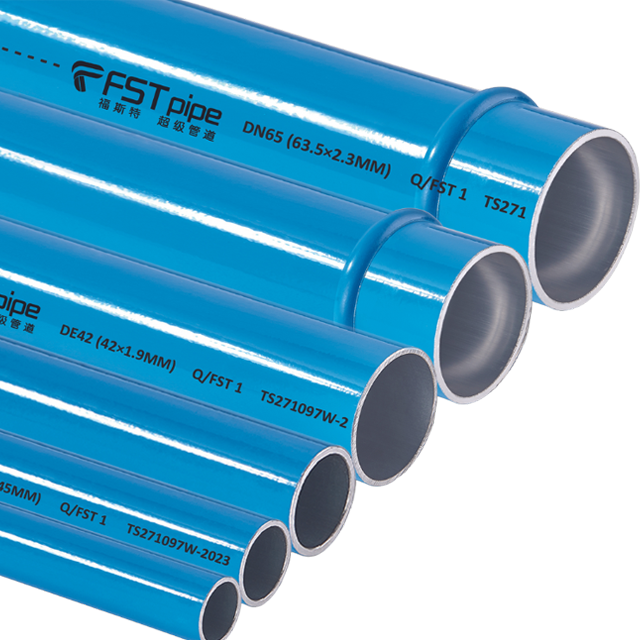
Aluminum pipe eliminates internal corrosion, protecting sensitive pneumatic tools and maintaining consistent flow rates.
Selecting the correct diameter (ranging from DN20-200) is critical to minimizing pressure drop and reducing compressor energy costs.
Push-to-connect and modular fittings drastically reduce labor costs and downtime during installation or facility expansion.
Total Cost of Ownership (TCO) for aluminum is highly competitive due to energy savings and zero-maintenance requirements, despite a higher upfront material cost than steel.
Facility engineers are abandoning traditional piping materials during system upgrades. They see the hidden risks. Old materials fail modern industrial demands. We must evaluate these materials honestly to understand why aluminum is taking over.
Black iron and steel hide massive operational costs. Steel corrodes internally over time. Moisture in the compressed air causes scaling. This rust flakes off and travels downstream. It clogs filters and ruins expensive pneumatic tools. Furthermore, steel is heavy. It requires specialized threading equipment and extensive labor to install.
Copper offers excellent air purity. It does not rust. However, copper presents two massive barriers. First, raw material costs fluctuate wildly. This makes budget forecasting difficult. Second, installation requires specialized brazing labor. Open flames demand hot-work permits. These permits complicate facility upgrades and slow down deployment.
PVC requires a strict warning. You must eliminate it from consideration immediately. OSHA issues severe warnings regarding PVC in compressed air applications. PVC becomes brittle over time. Under pressure, it can shatter uncontrollably. Exploding PVC creates dangerous shrapnel. This poses a massive safety hazard to workshop personnel.
The verdict strongly favors aluminum. It offers the best balance of structural integrity and clean air delivery. It ensures ISO-compliant air cleanliness. Best of all, it introduces very low installation friction.
Piping Material | Internal Corrosion Risk | Installation Labor | Safety & Compliance |
|---|---|---|---|
Black Iron / Steel | High (Rust and Scaling) | Intensive (Threading/Heavy) | Safe (High pressure rating) |
Copper | Low | Intensive (Brazing/Hot work) | Safe (High pressure rating) |
PVC | Low | Easy (Gluing) | Dangerous (Shatter risk / OSHA violations) |
Aluminum | Zero | Very Low (Push-to-connect) | Safe (ASME/CE compliant) |
Best Practice: Always audit your current material before an upgrade. Identify existing pressure drops caused by internal scaling. This data justifies the switch to modern extruded materials.
Proper sizing determines network efficiency. You must match compressor output and pipeline distance to the correct internal diameter. If you choose a pipe that is too small, air velocity increases. High velocity creates friction. Friction leads to severe pressure drops. Selecting the appropriate DN20-200 aluminum piping requires a strategic approach.
Follow these steps to evaluate your sizing criteria:
Calculate total compressor output in CFM (Cubic Feet per Minute) or L/min.
Measure the total linear distance of the planned pipeline route.
Count the number of bends, tees, and valves, as these add equivalent length to the system.
Consult manufacturer flow charts to find the optimal internal diameter.
Your facility loop acts as the primary artery. We call this the main header. You should install the main header in a closed-loop ring. A ring layout equalizes pressure across the entire workshop. Air flows in two directions to reach any demand point. For medium to large workshops, use larger diameters like DN40 to DN200. These larger pipes act as secondary air storage. They prevent pressure drops across long distances. When a large machine cycles on, the stored volume absorbs the shock.
Drop lines pull air from the main header down to the workstation. You must size these drops correctly for specific machinery. Most individual tools operate perfectly on DN20 to DN32 drop lines. Ensure you pull air from the top of the main header. A "swan neck" or top-mounted quick drop prevents accidental moisture from draining into the pneumatic tool.
Common Mistake: Never run drop lines smaller than the tool's inlet port. Starving the tool of volume causes erratic performance, even if the pressure gauge reads correctly.
Future-proofing remains a standard engineering practice. You should oversize the main header by one tier. If your current calculations suggest DN40, install DN50. This small upgrade accommodates future workshop expansions. You will not need to retrofit the entire loop when adding new CNC machines next year.
Extruded aluminum walls provide hard returns on investment. The physical properties of the material directly impact daily operations. You must translate these technical features into measurable outcomes.
Energy efficiency represents the largest ongoing expense in compressed air. Smooth internal surfaces matter. Aluminum offers an incredibly low friction coefficient. Air glides through the pipe in a laminar flow. Rough steel pipes create turbulence. Turbulence fights the air stream and causes pressure drops. The physics dictate a harsh reality. A single 1-bar (14.5 psi) pressure drop forces your compressor to work harder. It can increase energy consumption by 7%. Aluminum prevents this degradation. The smooth walls never deteriorate.
Air purity directly impacts product quality. Aluminum's anti-corrosive nature meets strict air purity classes. The ISO 8573-1 standard governs compressed air quality. Modern facilities require pristine air. CNC machining centers utilize sensitive pneumatic valves. Automotive paint booths demand oil-free and particulate-free streams. Sensitive robotics fail if contamination enters their cylinders. Aluminum piping guarantees that the pipeline itself will not introduce particulates.
We see significant improvements in downstream filtration life. Because the pipe does not rust, inline filters process less debris. You replace filter elements less frequently. This reduces operational interruptions.
Deploying a new network introduces field concerns. Facility managers worry about sagging pipes and leaking joints. Proper implementation mitigates these risks. Aluminum systems utilize advanced connection technologies.
Push-to-connect fittings dominate the smaller diameters. They are quick and require no special tools. You simply cut the pipe, deburr the edge, and push it into the fitting. An internal gripping ring locks the pipe in place. An O-ring creates a perfect seal. For larger diameters (DN80 and above), systems rely on crimped or grooved fittings. These heavy-duty connections handle massive air volumes safely. They provide immense structural rigidity. A properly supported compressed air piping system will not sag over long spans.
Deburr thoroughly: Sharp edges tear the internal O-ring during insertion.
Mark insertion depths: Visually confirm the pipe fully seats into the fitting block.
Support the weight: Place hanging brackets at manufacturer-specified intervals.
Leak prevention requires discipline. You must use proprietary, manufacturer-matched O-rings and fittings. Mixing and matching generic brands invites disaster. Different brands use slightly different extrusion tolerances. A common community complaint involves micro-leaks caused by mismatched components. Stick to one unified ecosystem to guarantee your seals.
Scalability defines operational agility. Workflows change. You will move machinery. Aluminum loops make this easy. You can add "hot taps" or modify the loop over a single weekend. You do not need threading tools. You do not need welding permits. You isolate a section, cut the pipe, insert a new tee, and resume production.
Selecting the right vendor is just as critical as selecting the material. Not all extruded products meet industrial standards. You need a structured vendor evaluation framework to filter out inferior suppliers.
First, verify certification and testing. Do the pipes meet ASME, UL, or CE pressure vessel standards? Compressed air stores massive amounts of potential energy. Substandard extrusions can rupture under pressure. Always request official testing certificates before purchasing.
Second, evaluate system completeness. Does the manufacturer offer a full ecosystem? You will need more than just straight pipes. You need isolation valves, quick drops, flexible hoses, and mounting brackets. The vendor must supply these in the exact DN20-200 range your facility requires. Piecing together a system from multiple vendors ruins the warranty and introduces leak paths.
Third, assess warranty and engineering support. Look for manufacturers offering 10-year guarantees against manufacturing defects. Premium brands stand behind their O-rings and pipe coatings. Additionally, prioritize suppliers offering local engineering support. They can assist with system layout planning.
Your next steps should involve actionable data gathering. Request a 3D layout simulation from your shortlisted vendors. Ask them to perform a pressure-drop calculation based on your proposed routing. This data will validate your design before you spend any money.
Upgrading to an aluminum compressed air network is a strategic investment. It directly improves facility energy efficiency. It extends tool longevity by delivering clean, particulate-free air. It also grants your team unmatched operational agility for future expansions.
You must take a methodical approach to this upgrade. Audit your current system's CFM requirements first. Map out your future workshop layouts before finalizing the bill of materials. Choose the correct pipe diameter to prevent flow restrictions. Rely on unified, modular fitting ecosystems to eliminate leaks.
Take action today to optimize your plant. Download a detailed sizing chart from a reputable manufacturer. Map your primary headers and drop lines. Finally, contact an application engineer to request a custom layout quote tailored specifically to your facility's operational demands.
A: Yes. You can connect them using specific threaded or flanged adapter fittings. Engineers often use these adapters to transition smoothly from an existing legacy compressor room directly out to the new aluminum network on the workshop floor.
A: Generally, no. For smaller diameters using push-connect fittings, simple pipe cutters and deburring tools suffice. Larger diameters may require specific lugging or grooving tools provided directly by the manufacturer to secure the heavy-duty joints.
A: We strongly advise against mixing brands. While they look similar, slight variations in extrusion tolerances exist. Mixing brands compromises warranty integrity and ruins O-ring seal tolerances, which significantly increases the risk of micro-leaks.
A: Aluminum expands and contracts with temperature changes. You must account for its thermal expansion coefficient. Install proper expansion loops or use sliding mounting brackets in long straight runs to allow the pipe to move safely without stressing the fittings.