Views: 0 Author: Site Editor Publish Time: 2026-07-08 Origin: Site
Selecting the right industrial pipeline material dictates your facility's operational longevity. Poor material choices trigger sudden pressure drops. They cause unexpected and expensive downtime. They also drive up long-term maintenance needs significantly. Plant managers constantly balance mechanical performance with operational efficiency. A wrong decision causes catastrophic leaks. It forces emergency shutdowns across the entire production line.
Modern facility planning shifts rapidly away from legacy materials. Engineers rarely install heavy black iron today. They also avoid brittle PVC in new pressurized builds. Instead, they rely heavily on high-performance stainless alloys and modular aluminum. These advanced materials deliver vastly superior performance. They solve traditional engineering challenges easily.
This guide provides an evidence-based framework for your next pipeline project. We explore how fluid mediums dictate your ideal choice. We examine how operating environments influence material behavior. You will learn exactly when to deploy each material. We highlight methods to maximize safety and mechanical efficiency. We also outline common implementation risks you must actively avoid.
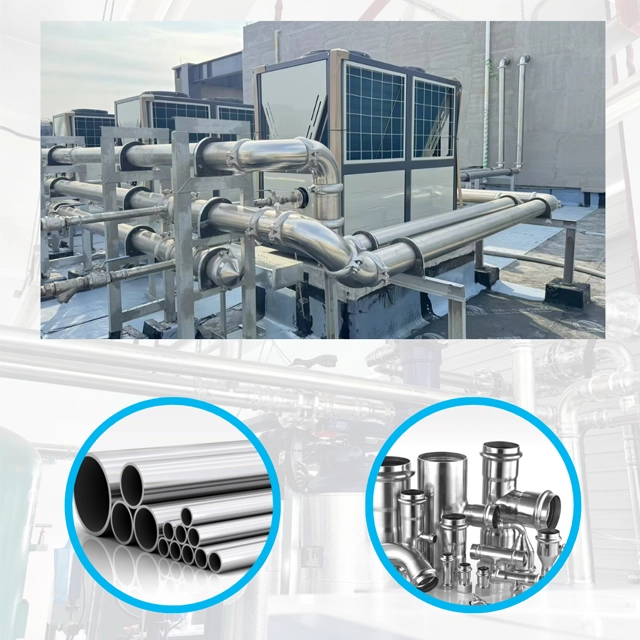
A stainless steel piping system is the definitive choice for harsh environments, high-pressure liquid transfer, and strict sanitary compliance (FDA/USDA).
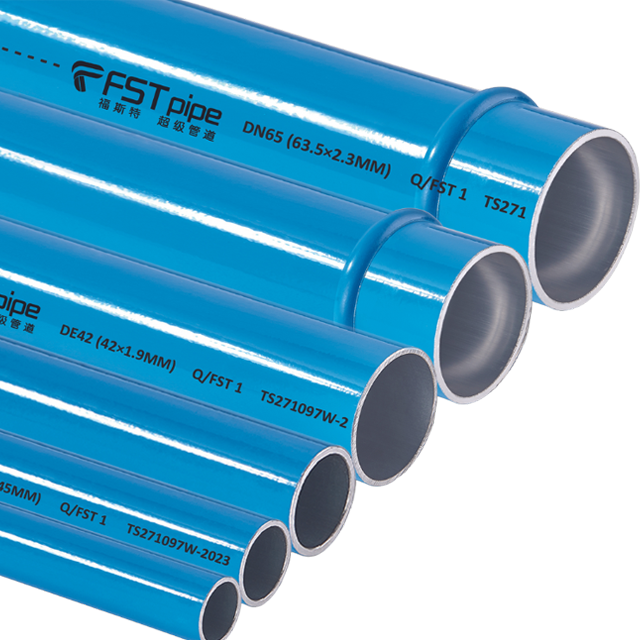
An aluminum air piping system dominates compressed air and inert gas applications due to its lightweight modularity and rapid, zero-weld installation.
CapEx vs. OpEx: Aluminum offers lower initial labor and installation costs, while stainless steel delivers a near-permanent lifespan in highly corrosive conditions, maximizing long-term ROI.
Mixing materials without proper dielectric isolation risks galvanic corrosion—system uniformity is highly recommended.
Before purchasing materials, you must establish a clear project baseline. Plant managers must define technical success criteria early. You cannot guess on these critical specifications.
You must identify your exact fluid medium first. Differentiate clearly between aggressive liquids and compressed gases. Chemicals and sanitary water behave very differently than air. Consider the fluid's specific gravity. Evaluate its pH level thoroughly. High-alkaline fluids destroy certain alloys. Highly acidic fluids require premium metal grades. You must also account for suspended solids. Abrasive slurries scour the inside of pipes relentlessly. They wear down thin walls quickly.
Gas systems face entirely different challenges. Media like compressed air, nitrogen, or vacuum lines demand exceptionally smooth internal bores. Friction inside the pipe ruins gas flow dynamics. Furthermore, compressor oils sometimes enter the airline. You need materials that resist these synthetic lubricants perfectly.
Define your required performance thresholds carefully. Mechanical failures often stem from poor parameter mapping.
System Pressure: Record your maximum operating pressure carefully. Measure this in PSI or Bar. Account for unexpected surge pressures. Compressors often create pulsation. Liquid pumps generate violent water hammer effects. Your joints must handle these shocks.
Temperature Extremes: Map out thermal limits accurately. Note the fluid's internal temperature. Also record the ambient room temperature. Cryogenic applications make certain metals dangerously brittle.
Thermal Expansion: Metals expand when heated. They contract when cooled. Long pipe runs need expansion loops. You must calculate this physical movement accurately.
Weigh your need for future layout changes carefully. Think about your five-year plan. Many modern factories frequently reconfigure their floor plans. They shift production lines monthly to accommodate new products. These facilities benefit heavily from modular systems. You literally unbolt them and re-route the flow.
Other industrial plants require permanent, static infrastructure. Refineries and breweries rarely move their main lines. In those cases, rigid durability matters far more than modularity. Permanent welded networks resist unauthorized changes stubbornly.
A robust stainless steel piping system provides exceptional value. It thrives in demanding industrial sectors. It actively survives where weaker materials fail entirely.
This metallic alloy boasts unmatched tensile strength. We specifically refer to premium grades like 304 and 316L. It handles extreme temperature fluctuations effortlessly. Engineers trust it for both cryogenic freezing lines and superheated steam. You also gain heavy-duty impact resistance. It survives accidental forklift strikes safely. It withstands falling equipment on the factory floor without rupturing.
The material naturally forms protective chromium oxide layers. This microscopic barrier prevents degradation rapidly. The 316L variant includes molybdenum. This addition drastically improves chloride resistance. It stops pitting corrosion completely. It deflects damage from harsh chemical exposure. It also withstands aggressive, high-temperature washdown procedures easily. If a technician scratches the surface, it recovers. The chromium layer instantly self-heals when exposed to ambient oxygen. This unique trait guarantees decades of leak-free service.
The food, beverage, and pharmaceutical industries strictly mandate hygiene. They absolutely require a reliable stainless steel pipeline solution everywhere. Bacteria hide in microscopic crevices. Traditional threaded iron pipes provide perfect breeding grounds. This premium metal eliminates these hiding spots. Its non-porous surface ensures perfect clean-in-place (CIP) compatibility. Facilities easily meet strict FDA and USDA regulations. You can sterilize the lines repeatedly without causing metal fatigue.
You must prepare for intensive installation processes. Deploying this system requires specialized labor. You need certified TIG welders for secure joints. Welders must purge the lines internally with argon gas. This slows down progress significantly. You might also use heavy-duty press fitting tools. Threading thick pipes demands substantial physical effort. Consequently, you face longer deployment schedules. However, this rigorous process yields permanent reliability.
Modular systems represent a massive leap forward in facility engineering. They solve many traditional pneumatic challenges immediately. They streamline deployment drastically.
Aluminum ranks among the most versatile metals available today. It feels extremely lightweight during physical handling. Installers maneuver long sections safely without cranes. It naturally resists oxidation from ambient factory moisture. Additionally, it features exceptionally smooth internal bores. This internal smoothness dramatically reduces air friction.
A modern aluminum air piping system dominates gas transfer applications universally. It serves as the undisputed industry standard for compressed air networks. Air compressors generate substantial moisture. Legacy iron pipes rust internally from this water. The rust flakes off and travels downstream rapidly. These abrasive flakes destroy expensive pneumatic cylinders. Modular aluminum completely eliminates internal rust. Your downstream equipment lasts much longer. It actively helps facilities achieve ISO 8573-1 air quality compliance.
You do not need heavy machinery to install these lines. Think about the tooling weight. A standard steel threader weighs over a hundred pounds. Here, installers just carry a simple pipe cutter. They use a lightweight deburring tool. Top manufacturers utilize smart push-to-connect fittings. They also use simple mechanical clamping mechanisms. You avoid threading, soldering, or welding completely. A two-person team can pipe an entire warehouse in days. This simplicity drastically reduces facility downtime.
We must acknowledge a few physical limitations objectively. It generally fails when handling aggressive liquids directly. It degrades quickly under heavy caustics or strong acids. You should never use it for extreme high-temperature fluid transfers. It melts or distorts at much lower temperatures than steel alloys. Keep it restricted strictly to approved gases and non-corrosive fluids.
Engineers must compare these options across several crucial dimensions. Your final decision impacts daily operations heavily.
Consider the tooling required for each material. Steel demands specialized heavy tooling. Certified welding requires dangerous hot-work permits. You must assign fire watches. This burns valuable labor hours. You risk major facility downtime during deployment.
Conversely, modular aluminum allows rapid assembly. Technicians just cut the pipe and deburr the edges. They push it into the fitting securely. Hand-tool assembly requires no fire bureaucracy. You can often install these networks without shutting down adjacent production lines.
You must evaluate both internal and external facility environments carefully. Assess how each material handles tough external factory conditions. Saline environments attack exteriors relentlessly. Acidic vapors in chemical plants destroy weak metals. Steel survives these external attacks beautifully.
Also, consider internal wear and tear. Internal fluid friction wears down pipe walls over decades. Let us discuss pipe versus tube sizing. Steel uses nominal pipe size (NPS). Schedule 40 steel walls handle extreme pressures easily. Modular systems often use precise outer diameter (OD) tubing sizes. Their walls stay thinner to minimize weight. You sacrifice extreme pressure capacity for handling ease.
You must evaluate operational dynamics over the system's lifespan.
Lightweight modular systems demand lower initial deployment effort. Furthermore, the smooth interior reduces the compressor's daily workload. This seamless flow minimizes your daily energy consumption physically. The air reaches its destination faster.
Conversely, steel requires massive initial deployment effort. However, it yields a remarkably long operational lifecycle. You face near-zero replacement needs in hostile environments. It handles extreme physical abuse gracefully over decades.
Performance Metric | Stainless Steel Alloy | Modular Aluminum |
|---|---|---|
Primary Application | Harsh chemicals, sanitary liquids, steam | Compressed air, vacuum, inert gases |
Installation Method | Welding, threading, heavy press fittings | Push-to-connect, mechanical clamping |
Labor Intensity | High (Requires certified specialists) | Low (Uses standard hand tools) |
Corrosion Resistance | Exceptional (Handles extreme pH levels) | High (Ambient moisture only) |
System Weight | Extremely heavy | Very lightweight |
Mistakes during the design phase haunt facilities for years. You must navigate common engineering pitfalls carefully.
We see this mistake often. Never mix incompatible metals carelessly during installation. Installers sometimes bolt a lightweight flange directly to a steel valve. Ambient moisture acts as an electrolyte. The softer metal acts as an anode. It corrodes into white powder rapidly. The joint fails under pressure. You must install proper dielectric unions between different materials. These specialized plastic or rubber isolators break the electrical conductivity perfectly. Always specify them in your blueprints.
Consider how often your plant floor plan actually changes. Many modern manufacturing plants add new workstations weekly. In these cases, lightweight lines allow incredibly quick tap-ins. You simply depressurize the line temporarily. Then, you cut the pipe and clamp a new drop fitting.
However, if your layout remains permanent, welded joints provide definitive security. They create a tamper-proof network. High-risk chemical plants prefer this permanent rigidity. It prevents unauthorized line modifications entirely.
Follow this simple logic framework for immediate decisions. It prevents analysis paralysis during procurement.
Choose Stainless if: You actively handle liquids, harsh chemicals, or extreme heat. Always select it when requiring strict FDA hygiene compliance. It remains the only choice for volatile fluid transfer.
Choose Aluminum if: You build a compressed air or nitrogen network. Select it when speed of deployment remains your top priority. Use it to maximize daily energy efficiency for gas compressors.
Neither option represents a universally superior choice for every facility. Your selection hinges entirely on transported media and site constraints. You must align the material with your specific engineering realities.
Stakeholders must rigorously audit their compressor outputs before procurement. You should carefully review fluid specifications and pressure ratings. Never guess on temperature thresholds or chemical compatibility. Small errors compound over time.
Consult with our engineering team today. We gladly offer comprehensive site evaluations. We guide you through the complex selection process step-by-step. You can easily request a customized material specification sheet tailored to your facility.
A: It works adequately for chilled water within specific, treated closed loops. However, we generally do not recommend it for potable or aggressive water. Oxygen-rich water increases oxidation risks significantly when compared to high-grade steel alternatives. Always consult a water treatment specialist before deploying it.
A: It represents a perfectly viable and highly durable option. However, it often creates an unnecessary deployment burden for standard air networks. You should only specify it for compressed air if your external factory environment contains highly corrosive vapors that would quickly degrade softer exterior metals.
A: Both materials provide exceptionally smooth interior surfaces initially. However, aluminum's seamless extrusion and specialized modular fittings specifically optimize laminar flow for gases. This precision engineering minimizes internal friction perfectly. It delivers a marginally better pressure retention rate for air compressors over long plant distances.