Views: 0 Author: Site Editor Publish Time: 2026-06-28 Origin: Site
Delivering industrial gases like nitrogen demands absolute system integrity. Facility managers know escaping gas spells disaster. You simply cannot afford invisible leaks, process contamination, or compromised facility safety. Today, decision-makers face a difficult balancing act. They must weigh upfront material costs against long-term operational reliability. Teams must also meet strict pressure vessel standards while navigating harsh environmental demands. Extreme temperatures and corrosive atmospheres easily expose weak infrastructure. We see operations constantly struggling to evaluate these critical factors properly. This guide delivers an evidence-based framework for planning your gas delivery network. You will learn how to approach material selection logically. We will explore ways to mitigate implementation risks effectively. Finally, you will understand how specific metal grades maximize lifecycle value and ensure compliance across demanding industrial environments.
Purity & Integrity: Stainless steel eliminates scaling and outgassing, ensuring zero contamination for high-purity nitrogen and inert gas applications.
Thermal Versatility: Specific stainless steel grades (like 304L/316L) maintain structural stability in extreme cryogenic conditions (liquid nitrogen) without embrittlement.
Compliance: Properly welded stainless steel systems naturally align with stringent industrial codes, including ASME B31.3 for process piping.
Lifecycle Value: While initial CAPEX is higher than alternatives, the Total Cost of Ownership (TCO) is mitigated by a near-zero maintenance lifecycle and leak-free performance.
Industrial gas leaks create invisible operational drains. They silently increase utility costs day after day. Leaking nitrogen also poses severe asphyxiation hazards. Nitrogen displaces oxygen silently in enclosed spaces. Workers cannot smell or see the danger. Small leaks in confined areas easily kill people. You must treat these specific physical risks seriously.
Contamination introduces another massive operational threat. Degrading pipe materials often shed particulates into the gas stream. This microscopic debris easily destroys sensitive pneumatic equipment. It compromises sterile cleanrooms instantly. A single rust flake ruins expensive pharmaceutical batch processes. We see these expensive failures happen when facilities choose substandard materials.
A viable piping system must satisfy several strict success metrics. You need infrastructure built for flawless performance.
Structural Permanence: The material must resist physical degradation over decades of constant use.
Zero-Leakage Joints: Connections must remain completely sealed against permeation or pressure loss.
Inert Inner Walls: The pipe interior cannot react chemically with the transported media.
Scalable Pressure Thresholds: Systems must safely handle sudden flow surges and baseline pressure increases.
Let us assess why certain materials excel in demanding environments. Corrosion resistance remains a primary concern for moisture-sensitive gases. The metal requires a minimum chromium content of 10.5 percent. This creates a passive chromium oxide layer. This layer prevents internal oxidation naturally. It forms an invisible shield across the surface. This shield self-repairs if physically scratched. It acts as a critical requirement for pure delivery. Nitrogen must remain absolutely clean during transfer. The chromium layer guarantees an uncontaminated delivery pathway.
High-pressure tolerance matters just as much for safety. Facilities often push gases at extremely high velocities. The pipe must contain this kinetic energy reliably. The metal provides superior tensile strength natively. It accommodates high-pressure gaseous nitrogen delivery easily. You achieve this safety without requiring excessively thick walls. Thinner walls reduce the overall system weight. They make overhead installation much easier. You save money on structural supports and heavy hanger hardware.
The cryogenic requirement creates a unique engineering challenge. Liquid nitrogen (LN2) is stored at incredibly cold temperatures. It sits at -320°F (-196°C) during typical storage. Standard carbon steels cannot survive this environment. Their atomic structure locks up completely. They become brittle and shatter like glass upon impact. This failure creates an immediate, catastrophic workplace hazard. Therefore, utilizing austenitic stainless steel piping for nitrogen is mandatory. It serves as the baseline for safe cryogenic transfer. The austenitic molecular structure remains flexible. It absorbs impact safely even at absolute freezing temperatures.
Selecting the right metal grade dictates overall system longevity. Type 304 serves as the dominant industry standard. Most facilities use it for general inert gas delivery. It handles indoor pneumatic systems effortlessly. It provides a highly cost-effective solution for standard needs. It contains 18 percent chromium and 8 percent nickel. This exact blend offers excellent baseline corrosion defense.
However, Type 316 takes protection a crucial step further. It contains added molybdenum in its alloy mix. Molybdenum drastically enhances resistance to harsh chlorides. Saltwater vapor attacks standard metals quickly. Industrial chemical washes cause similar rapid degradation. Pitting corrosion creates tiny pinholes through the pipe wall. You need 316 to stop this pitting process. Coastal environments absolutely demand this upgrade.
The "L" designation stands for extremely low carbon content. This minor chemical tweak changes everything during installation. Standard grades contain higher carbon levels naturally. The extreme heat from welding causes this carbon to migrate. It forms chromium carbides along the weld seam. Engineers call this dangerous process "sensitization." Sensitization strips the protective chromium from the weld area. It leaves the joint highly vulnerable to rapid rusting.
Grades like 304L and 316L solve this problem completely. Their carbon content drops from 0.08 percent down to 0.03 percent. They minimize carbide precipitation during extreme heating. They prevent localized corrosion at the weld seams. This ensures the joint remains as strong as the pipe itself.
Review the decision matrix below to guide your choices. Use it to standardize your facility specifications.
Material Grade Selection Guide | |||
Grade | Best Application Environment | Key Advantage | Common Use Case |
|---|---|---|---|
304 | Indoor, climate-controlled spaces | Cost-effective baseline performance | Standard gaseous nitrogen |
304L | Welded indoor infrastructure | Prevents weld seam sensitization | Continuous welded piping mains |
316 | Coastal or exposed areas | Superior chloride pitting resistance | Marine or outdoor delivery |
316L | Corrosive or high-purity zones | Maximum structural and chemical stability | Pharmaceutical cleanrooms |
Use 304 or 304L for standard indoor gaseous nitrogen lines. Upgrade to 316L for corrosive processing environments. High-purity pharmaceutical applications also demand the rigorous 316L specification.
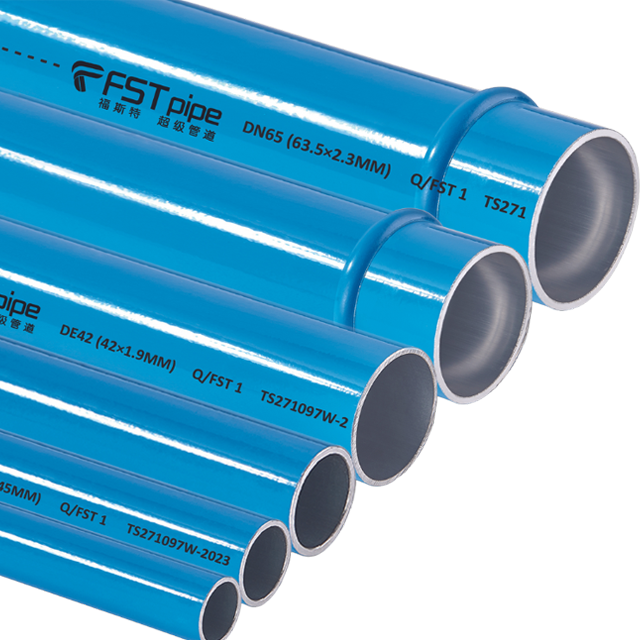
Facility engineers frequently compare different piping materials during planning. Aluminum represents a popular modern alternative. Many shops use it for modular compressed air systems. It provides a viable stainless steel air pipe alternative for certain lightweight use cases. Its primary advantage comes from its very low weight. Installers use simple press-fit connection tools. They assemble the network rapidly without welding. You can easily modify or expand these systems later.
However, aluminum has severe functional limitations in critical applications. It cannot handle the extreme cryogenic temperatures of liquid nitrogen. The metal contracts drastically under cold temperatures. This contraction causes the press-fit seals to fail immediately. Aluminum also lacks the immense pressure ratings of heavy-walled systems. You cannot use it safely for critical high-pressure gas mains.
Copper introduces entirely different installation risks. Plumbers must braze copper to join the pipe sections. Brazing requires intense heat and chemical flux. This process frequently introduces internal oxides. It leaves a burnt residue inside the pipe bore. These oxides contaminate the pure gas stream immediately. Installers must meticulously purge and clean every single joint. This slows down construction significantly. Copper also work-hardens and cracks under vibration from heavy compressors.
Our primary metal offers superior mechanical strength instead. It provides a much wider range of chemical compatibility. It handles aggressive cleaning solvents without degrading. You must weigh the objective trade-offs carefully. Choose heavier metals for absolute structural permanence. They guarantee extreme temperature safety and high-pressure compliance. Consider aluminum only for low-pressure, frequently modified shop-air applications.
Proper installation requires significant technical expertise. The welding challenge demands rigorous environmental control. Welders face a demanding technical challenge daily. They cannot treat this alloy like standard carbon steel. The molten puddle reacts violently with atmospheric oxygen. Drafts or moisture in the air ruin the joint instantly. You must enclose the welding area completely.
Purging requirements dictate the internal cleanliness of your system. You must protect the backside of the weld from oxygen. Failure causes "sugaring" during TIG or GTAW welding. Sugaring looks like a heavy, black crust inside the pipe. It creates turbulence and sheds abrasive particles into the gas stream. It ruins the integrity of the delivery network.
To prevent this, the pipe's interior must be purged. You fill the inner void with a protective inert gas. Argon remains the gold standard for this process. It displaces oxygen entirely and stabilizes the arc. However, utilizing nitrogen as a backing gas is viable. It offers a highly cost-effective alternative for standard grades. You must monitor flow rates carefully if using nitrogen.
Regulatory compliance guarantees your facility remains safe and legal. Ensure all selected materials meet strict industrial codes. Your installation methods must adhere to ASME B31.3. This code dictates the specific rules for Process Piping. It covers pressurized inert gases comprehensively. Your local jurisdiction might enforce additional safety standards. Always verify these codes early.
Risk mitigation starts long before the tools arrive. Vendor evaluation must include strict technical vetting. You must verify the contractor's specific field experience. Ask for proof of high-pressure welding procedures. Request their previous sanitary installation records. Do not hire general contractors for specialized gas infrastructure.
Financial planning demands a long-term perspective. Comparing CAPEX versus OPEX reveals the true asset value. The superior metal demands a noticeably higher initial material cost. You must also pay premium rates for skilled welding labor. The upfront invoice will look larger than plastic or aluminum options.
However, your OPEX rapidly approaches zero after activation. You eliminate all costs associated with internal corrosion entirely. The system never requires external painting or protective coatings. You do not spend maintenance budgets fixing sudden joint failures. The robust material simply stays intact year after year. This reliability protects your operational profit margins continuously. It prevents catastrophic downtime. One hour of line shutdown costs thousands in lost production. Investing upfront prevents these random shutdowns.
System longevity provides the ultimate financial justification. A properly specified system resists degradation indefinitely. A well-welded network will easily outlast the building it sits in. Engineers regularly plan for a 50-year operational lifespan. You install it once and essentially forget about it. The smooth internal bore remains incredibly easy to sanitize.
Follow these specific next-step actions for smooth procurement:
Define the exact state of the transported gas. You must clarify whether you are moving gaseous or liquid media.
Determine the precise pressure and flow requirements. Use these exact metrics to specify pipe schedules. You will typically choose between Schedule 10 and Schedule 40.
Request material test reports (MTRs) from all suppliers. Use these essential documents to verify metal origins. They guarantee you receive the exact grade authenticity you ordered.
For critical industrial gas infrastructure, robust material selection remains vital. Upgrading your infrastructure acts as a necessary risk management tool. The material safely handles extreme cryogenic temperatures without failing. It actively resists corrosion and maintains absolute gas purity. These properties make it the definitive choice for lasting operational stability. It simply outperforms every alternative on the market.
Take immediate action to secure your facility's gas network. First, consult with a specialized piping engineer to size your system accurately. Second, engage a trusted supplier to verify your exact grade requirements. Finally, establish strict, compliant welding procedures before any installation begins. Protect your facility by investing in permanent structural integrity today.
A: You can only use it for completely dry, low-pressure gaseous nitrogen. This applies strictly to non-critical applications. Carbon steel will rust immediately if any moisture enters the system. Furthermore, it is strictly prohibited for liquid cryogenic nitrogen. The extreme cold causes severe embrittlement, making the pipe shatter upon impact.
A: Argon serves as the industry standard. It guarantees maximum purity and weld stability. However, nitrogen frequently acts as a highly effective backing gas. It provides a cheaper alternative for standard austenitic metal pipes. You must ensure specific welding parameters remain tightly controlled when using nitrogen.
A: Schedule 10 and Schedule 40 are the most common choices. The exact requirement depends entirely on your system's maximum operating pressure. You must follow the precise engineering specifications dictated by ASME B31.3. Always calculate the schedule based on your specific flow rates and pressure drop models.